How Do I Make My Life More Green?

How Do I Make My Life More Green?
Live Green: Your Path to Environmental Stewardship
You can make your life more green by using less energy, wasting less food, buying less, repairing more, reducing single-use plastics, choosing lower-impact transportation, eating more plant-forward meals, and supporting local environmental action. You do not need to change everything overnight. Start With One habit you can repeat.
A greener life does not begin with guilt.
It begins with attention.
Most people are not trying to harm the planet. They are busy. They choose convenience. They buy what is available. They throw away food they meant to use. They drive because the route is familiar. They replace what could have been repaired.
But small choices become patterns. Patterns become culture. Culture shapes markets, communities, and policy.
The United Nations’ ActNow campaign focuses on everyday climate actions such as saving energy, choosing sustainable transportation, eating more plant-based foods, reducing food waste, reusing and repairing, and speaking up for change. (United Nations)
Living green is not about perfection.
It is stewardship in motion.
What Does It Mean to Live Green?
To live green means making everyday choices that reduce waste, conserve resources, lower emissions, and support a healthier planet.
That can include:
Using less electricity and water
Eating more plant-forward meals
Reducing food waste
Walking, biking, carpooling, or using transit when possible
Buying fewer new things
Repairing and reusing what you already own
Reducing single-use plastics
Composting and recycling correctly
Supporting businesses and policies that protect the environment
A green lifestyle should not feel like punishment. At its best, it creates less clutter, less waste, more intention, and a stronger connection to the places that sustain us.
What Should You Do to Live Green?
1. Use Less Energy at Home
Home energy is one of the easiest places to begin.
Replace old bulbs with LEDs, turn off lights, unplug chargers, wash laundry in cold water, seal drafts, and use heating and cooling more efficiently.
LED bulbs are a practical upgrade because residential LEDs use at least 75% less energy and can last up to 25 times longer than incandescent lighting. (The Department of Energy's Energy.gov)
Start With One: Replace one old bulb or unplug one unused device today.
2. Waste Less Food
Food waste wastes more than food. It also wastes the water, land, labour, packaging, fuel, and energy used to produce and deliver it.
The EPA describes preventing wasted food at home as one of the easiest ways to save money and reduce environmental impact. (US EPA)
Try:
Plan a few meals before shopping
Check the fridge before buying more
Freeze food before it spoils
Use leftovers creatively
Create an “eat first” shelf
Compost scraps where possible
Start With One: Cook one meal this week from food you already have.
3. Eat More Plant-Forward Meals
You do not have to become vegan overnight to reduce your food footprint.
Begin by adding more beans, lentils, vegetables, whole grains, nuts, seeds, and seasonal produce. A plant-forward approach is practical because it focuses on what you can add, not only what you remove.
Try one meatless dinner per week, one plant-based lunch, or one vegetable-heavy meal that is affordable and easy to repeat.
Start With One: Choose one plant-forward meal this week and make it good enough to become part of your routine.
4. Drive Less When Possible
Transportation is a major part of many personal carbon footprints, but greener transportation does not have to mean giving up your car completely.
Walk short errands. Bike when safe. Combine trips. Carpool. Use transit when practical. Work remotely when possible. Keep tires properly inflated. Consider fuel efficiency when replacing a vehicle.
The UN recommends walking, biking, public transportation, carpooling, trains, buses, and electric vehicles where practical. (United Nations)
Start With One: Replace one short car trip this week.
5. Buy Less, Repair More
The greenest purchase is often the one you do not make.
Before buying something new, ask:
Do I actually need this?
Can I borrow it?
Can I buy it secondhand?
Can I repair what I already own?
Will this last?
Reducing and reusing can lower waste, prevent pollution, save energy, reduce landfill use, and save money. (US EPA)
Repair is not just practical. It is a mindset shift.
It says objects, materials, labour, and money deserve respect.
Start With One: Repair, borrow, donate, or buy secondhand before one new purchase.
6. Reduce Single-Use Waste
Single-use items are built for convenience, not longevity.
Reusable bags, bottles, mugs, food containers, cloth towels, and refillable products can reduce unnecessary waste when they become daily habits.
The key is not owning reusable items. It is remembering to use them.
Keep them where your life actually happens: by the door, in the car, in your work bag, near the coffee maker.
Start With One: Put one reusable bag, bottle, or mug somewhere you will see it.
7. Recycle and Compost Correctly
Recycling helps, but it is not the first step. Reducing and reusing matter more.
Still, recycling correctly is important because local rules vary. Guessing can contaminate recycling streams and make programs less effective.
Composting is another useful habit because food scraps and organic waste can be diverted from landfill through backyard composting, municipal green-bin programs, or community drop-off options.
Start With One: Look up your local recycling or composting rules and correct one habit.

What Is the Greenest Lifestyle?
The greenest lifestyle is usually not the one filled with the most eco-products.
It is the one built around lower consumption, lower waste, lower energy use, lower-impact transportation, and stronger local connection.
A practical green lifestyle includes:
Buying less
Choosing durable goods
Repairing before replacing
Wasting less food
Eating more plant-forward meals
Using energy efficiently
Driving less when possible
Sharing, borrowing, donating, and reusing
Supporting local environmental action
Green living is not about turning your life into a carbon spreadsheet.
It is about reducing the leaks: wasted food, wasted energy, wasted money, wasted materials, and wasted attention.
Will We Be Able to Stop Climate Change?
Climate change can still be limited, but it requires action at every level: governments, businesses, communities, and individuals.
The UN says that to keep global warming to no more than 1.5°C, global emissions need to fall by 45% by 2030 and reach net zero by 2050. (United Nations)
Individual lifestyle changes cannot solve climate change alone.
But they still matter when they:
Reduce direct waste and emissions
Build greener social norms
Support broader change through voting, buying, investing, volunteering, and advocacy
The most useful mindset is not guilt.
It is participation.
Your choices are not the whole solution, but they are part of the solution you can touch.
Is Gen Z More Eco-Friendly?
Gen Z is often described as climate-aware, but concern does not always translate into consistent sustainable behaviour.
Cost, convenience, limited housing choices, transportation barriers, climate fatigue, and confusing information can all make green living harder.
This is true across generations.
The goal should not be to shame one age group or praise another. The goal is to make sustainable choices easier, cheaper, more practical, and more normal for everyone.
How to Lead a Greener Lifestyle
You lead a greener lifestyle by making sustainable choices visible, practical, and inviting.
You can:
Share tools instead of buying duplicates
Start a clothing swap
Join a local cleanup
Support repair cafés
Bring reusable items to community events
Encourage workplace waste reduction
Support businesses with credible environmental practices
Talk about climate without turning every conversation into a lecture
Leadership does not always look like a speech.
Sometimes it looks like bringing the extra reusable cup.
A Start With One Green Plan
Do not try to become perfectly green this week.
Choose one action:
Replace one old bulb with an LED
Cook one meal from food already in your kitchen
Try one plant-forward dinner
Carry one reusable bottle or mug
Repair one item before replacing it
Walk, bike, carpool, or combine one trip
Learn one local recycling rule
Compost one type of food scrap
Support one local environmental effort
Small actions become powerful when they become repeated.
Repeated actions become identity.
Identity becomes culture.
Frequently Asked Questions
How do I make my life more green?
Use less energy, reduce food waste, buy less, repair more, reduce single-use plastics, choose lower-impact transportation, eat more plant-forward meals, recycle correctly, compost when possible, and support local environmental action.
What should you do to live green?
Focus on home energy, food, transportation, shopping, and waste. Start with practical habits you can repeat instead of trying to change everything at once.
What is the greenest lifestyle?
The greenest lifestyle is low-consumption, energy-efficient, repair-oriented, plant-forward, low-waste, and community-minded. It prioritizes using what you already have before buying something new.
Will we be able to stop climate change?
We can still limit climate change, but it requires rapid emissions cuts, clean-energy transitions, policy action, business accountability, and public participation. Individual choices help most when paired with collective action.
Is Gen Z more eco-friendly?
Gen Z is often highly climate-aware, but sustainable action depends on affordability, access, habits, and systems. Every generation has a role in making greener living easier and more normal.
How do I lead a greener lifestyle?
Lead by example. Make sustainable choices practical, visible, and welcoming. Share resources, reduce waste, support local solutions, and invite others into small actions they can sustain.
Live Green, Start Small
A greener life is not built from panic.
It is built from respect.
Respect for the food on your table.
Respect for the energy in your home.
Respect for the water in your hands.
Respect for the materials behind the things you own.
Respect for the air, soil, forests, lakes, streets, and communities that hold your life.
You do not need to solve the whole crisis alone.
You need one choice that moves you toward care.
One reusable bag.
One repaired jacket.
One plant-forward meal.
One shorter drive.
One compost bin.
One better purchase.
One conversation.
One vote.
One neighbourhood action.
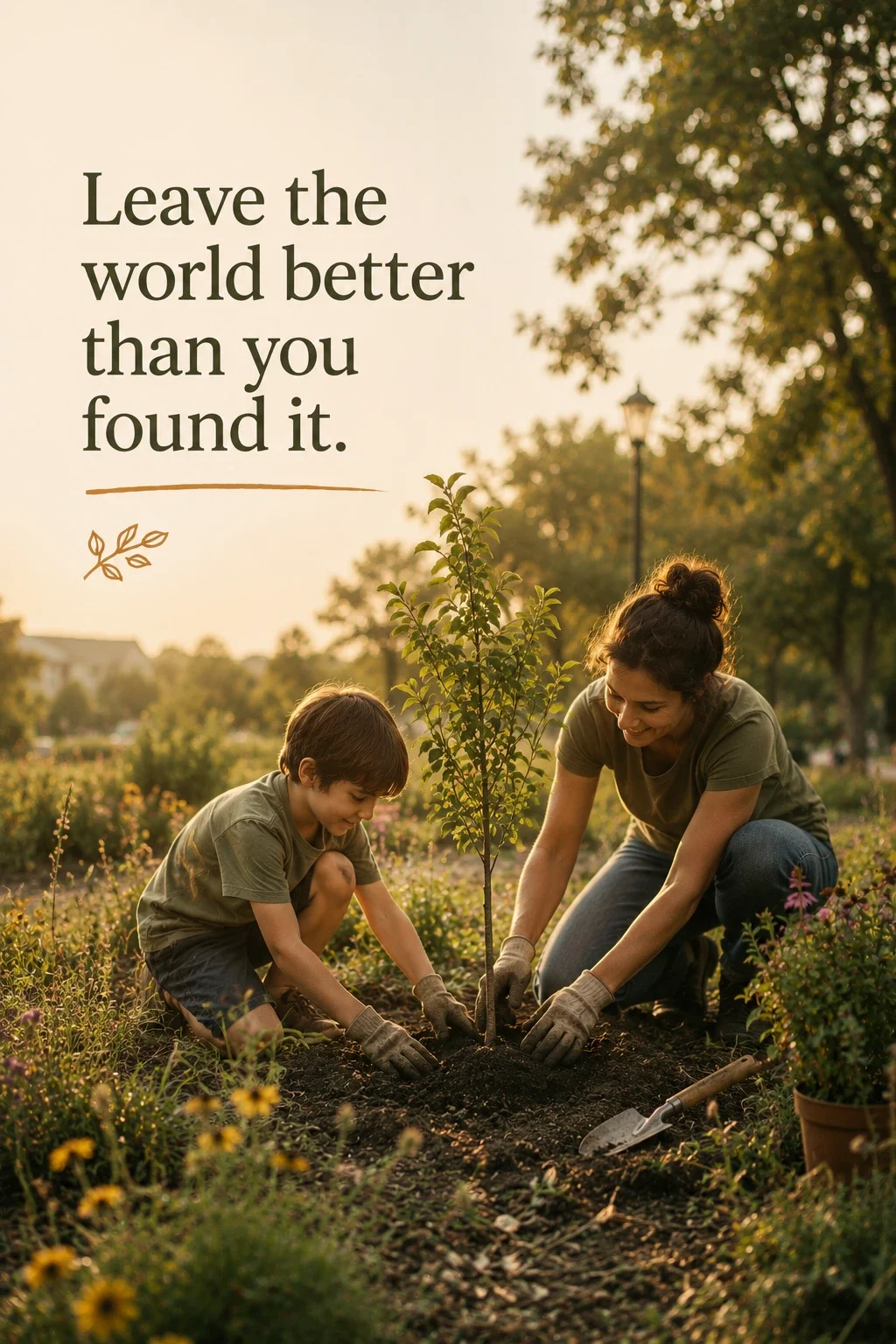
Live Green. Start With One choice that leaves the world a little better than you found it.
📘 Get the book: Start With One: Small Steps to a Big Change → a.co/d/5uoSTEJ
Small Choices, Big Impact: Sources Behind “How Do I Make My Life More Green?”
United Nations — ActNow: Ten Actions for a Healthier Planet
https://www.un.org/en/actnow/ten-actionsUnited Nations — ActNow Climate Campaign
https://www.un.org/en/actnowUnited Nations — Net Zero Coalition
https://www.un.org/en/climatechange/net-zero-coalitionUnited Nations Environment Programme — Sustainable Lifestyles and Skills
https://www.unep.org/topics/finance-and-economic-transformations/scp-and-circularity/sustainable-lifestyles-and-skillsUNEP — How Sustainable Living Can Help Counter the Climate Crisis
https://www.unep.org/news-and-stories/story/how-sustainable-living-can-help-counter-climate-crisisU.S. Department of Energy — LED Lighting
https://www.energy.gov/energysaver/led-lightingU.S. Environmental Protection Agency — Preventing Wasted Food at Home
https://www.epa.gov/recycle/preventing-wasted-food-homeU.S. Environmental Protection Agency — Reducing and Reusing Basics
https://www.epa.gov/recycle/reducing-and-reusing-basicsU.S. Environmental Protection Agency — Sustainable Management of Food
https://www.epa.gov/sustainable-management-foodGlobeScan — Gen Z Climate Attitudes and Sustainable Living
https://globescan.com/2025/05/28/insight-of-the-week-gen-z-climate-attitudes/Natural History Museum — Eco-Friendly Resolutions
https://www.nhm.ac.uk/discover/seven-eco-friendly-resolutions.htmlCenter for Biological Diversity — Live More Sustainably
https://www.biologicaldiversity.org/programs/population_and_sustainability/sustainability/live_more_sustainably.htmlOne Earth — Climate Solutions You Can Do at Home
https://www.oneearth.org/101-climate-solutions-you-can-do-at-home/Start With One — Source Book Inspiration
Start With One: Small Steps to a Big Change
Relevant theme: “Live Green: Your Path to Environmental Stewardship”