How is Spending Time With Family Important?

How is Spending Time With Family Important?
One Hour More: Nurturing the Heart of Relationships
There is a kind of wealth that does not show up in a bank account, a résumé, or a calendar filled with achievements.
It is the sound of familiar laughter from another room.
It is a meal that lasts ten minutes longer than expected.
It is a child telling a story badly, and everyone is listening anyway.
It is a parent, sibling, partner, grandparent, cousin, or chosen family member looking across the table and reminding you, without saying it directly: you belong somewhere.
Spending time with family matters because relationships are not maintained by intention alone. They are maintained by presence. Love may be felt deeply, but it is usually experienced in ordinary moments: shared meals, car rides, walks, phone calls, errands, bedtime rituals, weekend visits, and the quiet act of being available.
In Start With One, the chapter “One Hour More” asks us to set aside intentional time for loved ones, reminding readers that relationships are among life’s most precious treasures and that nurturing them is an investment in love, support, and long-term fulfillment.
That is the heart of this idea: you do not need to redesign your entire family life overnight. You do not need a perfect home, a perfect schedule, or a perfect relationship history.
You can begin with one hour more.
One meal.
One walk.
One conversation.
One phone call.
One moment of undivided attention.
One small act of presence that says," You matter to me.”
Family Time Is Not a Luxury. It Is Emotional Infrastructure.
We often talk about family time as though it is a soft benefit, something nice to have once the “important” work is done. But that framing misses the point.
Family time is emotional infrastructure.
It helps people handle stress, build identity, develop trust, and recover from life’s inevitable difficulties. The American Psychological Association notes that social support can help people manage stress more effectively and that support networks are important for resilience. (American Psychological Association)
This does not mean every family is simple, safe, or emotionally easy. Families can be complicated. Some are loving but busy. Some are fractured by distance, grief, divorce, addiction, silence, or old wounds. Some people build “family” through friendship, mentorship, community, or chosen relationships because their biological family is unavailable or unsafe.
Still, the deeper truth remains: human beings need dependable connections. We need people who know our story. We need relationships where we can be more than productive, polished, or impressive. We need places where our humanity is not an inconvenience.
Family time, at its best, provides that place.
The Power of Ordinary Moments
The most meaningful family memories are often not the expensive ones.
They are rarely the perfectly planned vacation photos. More often, they are the everyday rituals that become sacred only in hindsight.
Pancakes on Saturday.
A grandparent’s story told for the tenth time.
A sibling’s inside joke.
A parent waiting up.
A walk after dinner.
A board game that turned competitive.
A phone call that began with “just checking in” and somehow lasted an hour.
These moments matter because they create continuity. They tell each person, " We return to each other.”
Research on family meals offers one practical example. A 2023 systematic umbrella review found that greater family meal frequency was associated with protective benefits for children and adolescents, including a healthier diet, better mental health and well-being, and lower risk behaviours. (PubMed)
The meal itself is not magic. The table is not magic. What matters is the repeated opportunity to notice, listen, laugh, repair, and reconnect.
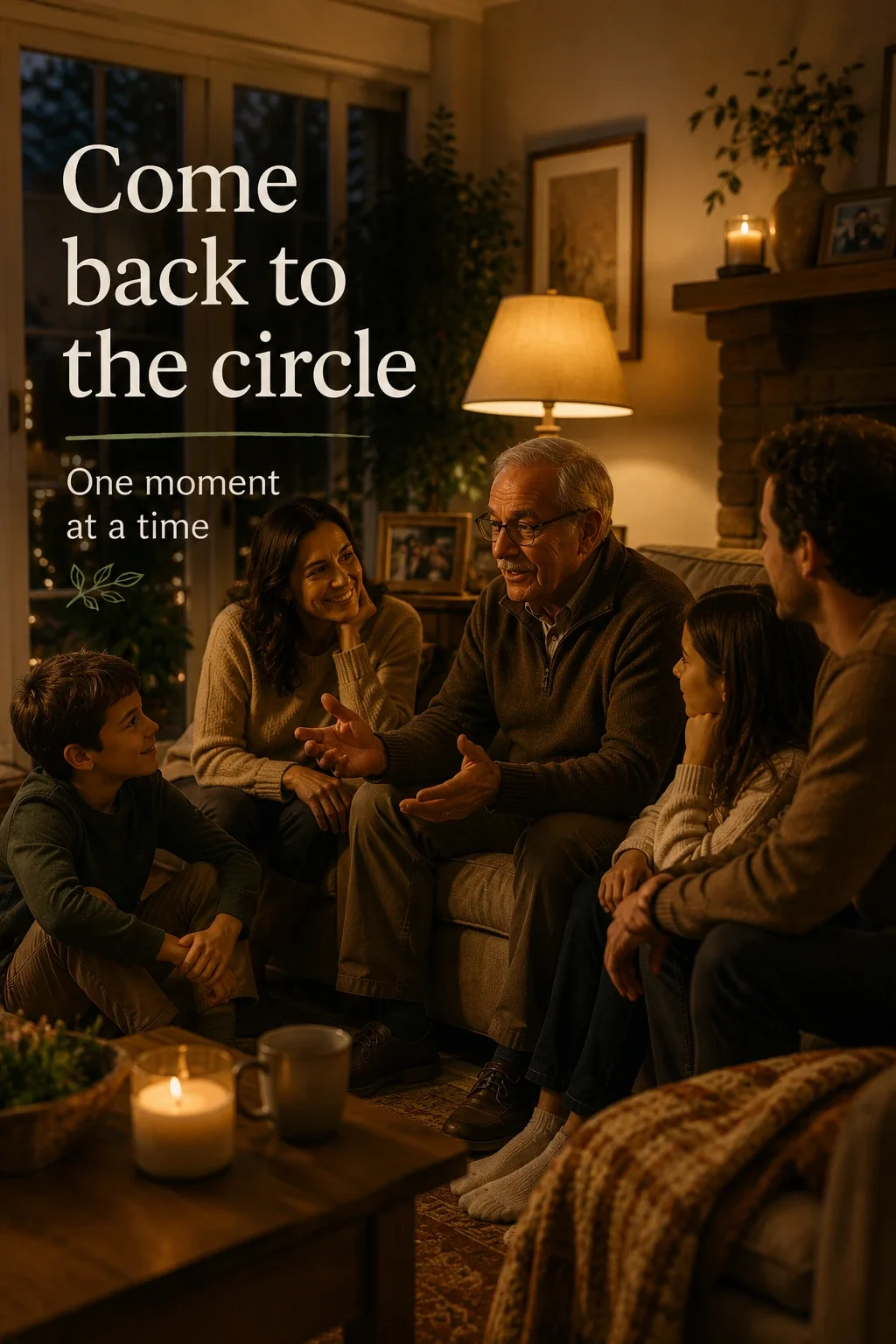
A family meal says: stop for a moment. Come back to the circle. Let us see each other before the world pulls us away again.
Why Family Time Matters Even More in a Digital Age
We are more reachable than ever and often less present than ever.
Screens have made it possible to be physically together and emotionally elsewhere. A family can sit in the same room while each person disappears into a different world. Parents answer work messages. Teens scroll. Children watch videos. Couples sit beside each other in blue light. Everyone is near. No one is quite there.
This is why modern family time must be intentional. Presence now requires protection.
The goal is not to demonize technology. Technology can connect families across distance, preserve memories, support learning, and help busy households coordinate life. The issue is not the screen itself. The issue is whether the screen quietly takes the place of eye contact, conversation, play, rest, and shared attention.
A device-free dinner once a week may sound small. So does a Sunday walk. So does ten minutes at bedtime. So does a call to a parent on the way home from work.
But small rituals repeated over time become the architecture of closeness.
Children Learn Love by Watching Time
For children, time is one of the clearest languages of love.
They may not understand adult pressure, financial strain, work deadlines, or emotional fatigue. But they understand when someone gets down on the floor to play. They understand when a parent looks up from a phone. They understand when a caregiver asks about the best and hardest part of the day and waits for the real answer.
Children develop social skills, emotional regulation, empathy, and communication through repeated interactions with trusted adults. Family routines also create predictability, which can help children feel secure. Studies on family meals have linked frequent shared meals with positive outcomes for children and adolescents, including nutrition, psychosocial health, and reduced risk behaviours. (PMC)
Again, this is not about perfection. No parent or caregiver can be fully present all the time. The Start With One approach is more humane than that. It asks for one intentional improvement, not impossible consistency.
One bedtime story without rushing.
One car ride without headphones.
One question was asked with genuine curiosity.
One apology when you were distracted.
One moment where a child feels chosen over the noise.
That is how trust is built.
Adults Need Family Time Too
Family time is not only for children.
Adults also need a connection that is not transactional. We need relationships that remind us who we are beneath our responsibilities. A person can succeed professionally and still feel emotionally undernourished. A person can be surrounded by coworkers, clients, notifications, and obligations and still long for one honest conversation with someone who knows them well.
Positive social connections are consistently associated with mental health and well-being, and social support helps people cope during difficult periods. (American Psychiatric Association)
Family time gives adults a place to metabolize life. It allows worries to be spoken about before they harden. It allows joy to be shared before it fades. It allows grief, stress, confusion, and change to be carried by more than one set of shoulders.
Sometimes, the most healing words in a family are not profound.
They are:
“Come over.”
“I made extra.”
“Tell me what happened.”
“I’m proud of you.”
“You don’t have to handle this alone.”
The Relationship Bank Account
One helpful way to think about family time is as deposits into a relationship bank account.
Every shared laugh is a deposit.
Every sincere apology is a deposit.
Every meal, call, walk, hug, and act of listening is a deposit.
Every time you show up when it would be easier not to, you add trust.
This matters because every family will face withdrawals: conflict, stress, misunderstanding, illness, distance, disappointment, loss. Families with no deposits struggle under the weight of ordinary strain. Families with steady deposits have more resilience. They may still argue. They may still hurt each other. But there is something to draw from.
The goal is not a conflict-free family. That does not exist. The goal is a family with enough connection to repair.
Quality Time Is Not Always Pretty
There is a dangerous myth that quality time must feel warm, peaceful, and photogenic.
Real family time is often messier.
The toddler melts down.
The teenager gives one-word answers.
The dinner burns.
The conversation gets awkward.
The aging parent repeats a story.
The sibling arrives late.
Someone checks their phone.
Someone says the wrong thing.
This does not mean the time failed. It means the time was real.
Family connection is not built only in beautiful moments. It is built when people stay present through imperfections. It is built when we learn each other’s rhythms, needs, limits, humour, sensitivities, and hopes.
Sometimes nurturing the heart of relationships looks like laughter. Sometimes it looks like patience. Sometimes it looks like a repair.
The “One Hour More” Practice
The idea of “One Hour More” is powerful because it is both simple and flexible. It does not demand a dramatic life overhaul. It asks one question:
Where could I give one more hour of meaningful presence to the people I love?
That hour can take many forms.
A weekly family dinner.
A Sunday morning walk.
A standing call with a parent.
A game night.
A shared chore done together.
A coffee with an adult child.
A visit to a grandparent.
A screen-free evening.
A drive with no agenda.
A slow breakfast.
A bedtime routine protected from distraction.
The key is not the activity. The key is attention.
In Start With One, the guidance is to schedule time with purpose, choose meaningful activities, and be present in the moment by putting aside distractions.
That advice is deceptively simple. It is also deeply countercultural.
In a distracted world, attention is love made visible.
Practical Ways to Spend More Meaningful Time With Family
1. Create a Weekly Anchor
Choose one recurring moment each week that belongs to family connection.
It might be Sunday dinner, Friday pizza night, Saturday morning errands together, a midweek walk, or a Sunday evening video call. The point is to create something predictable enough that people begin to trust it.
A weekly anchor says: Even when life gets busy, we come back to this.
2. Protect One Device-Free Window
Start small. Thirty minutes. One meal. One walk. One bedtime routine.
Put phones in another room or face down. Let the nervous habit of checking pass. At first, the silence may feel strange. Then the conversation begins to breathe again.
3. Use Ordinary Chores as Connection
Family time does not need to be entertainment.
Cook together. Fold laundry together. Wash the car. Walk the dog. Rake leaves. Grocery shop. Clean one room. These ordinary tasks often create better conversation than formal sit-downs because people talk more easily side by side.
4. Ask Better Questions
Replace “How was your day?” with questions that invite real answers.
“What made you laugh today?”
“What felt heavy?”
“What are you looking forward to?”
“What do you wish people understood about your life right now?”
“What was one good thing about today?”
“What do you need this week?”
A better question can open a door.
5. Build Intergenerational Bridges
Children need stories. Elders need to be heard. Adults need perspective.
Ask grandparents about their childhood. Ask parents what they were like before they became parents. Ask children what they think the future will look like. Ask teenagers what adults misunderstand.
Families become stronger when wisdom moves in more than one direction.
6. Make Repair Normal
No family spends time together without conflict. The healthiest families are not the ones that never rupture. They are the ones who repair.
“I’m sorry I interrupted you.”
“I was distracted earlier. Can we try again?”
“I didn’t handle that well.”
“I want to understand what you meant.”
“I love you, and I want us to do better.”
Repair is one of the highest forms of family time because it teaches that connection can survive imperfection.
Family Time and Identity
Families give us more than companionship. They give us a sense of narrative.
We learn where we came from. We inherit stories, recipes, values, sayings, songs, photographs, traditions, warnings, and dreams. We discover what our people survived. We learn what they celebrated. We decide what to carry forward and what to gently leave behind.
This matters because identity is stabilizing. When life becomes uncertain, knowing your roots can help you stand.
For some people, family identity is a source of pride. For others, it is complicated and requires healing. But even then, intentional family time can help create a healthier legacy. Every generation has the opportunity to change the emotional inheritance.
One hour more can become one pattern changed.
One apology can become one cycle interrupted.
One dinner table can become one safer place than the one before it.
Chosen Family Counts
Any honest article about family must make room for chosen family.
Not everyone has access to a loving biological family. Some people have lost family members. Some are estranged for necessary reasons. Some live far from relatives. Some have had to create safety beyond the family they were born into.
The principles still apply.
Spend time with the people who help you become more whole. The people who show up. The people who tell the truth with kindness. The people who celebrate your growth. The people who offer steadiness, not chaos.
Family is not only a structure. It is a function. It is the circle where care becomes consistent.
What to Say About Spending Time With Family
You can say this:
Spending time with family matters because love needs time to become visible. It strengthens emotional bonds, supports mental well-being, helps children feel secure, gives adults a place to be known, and creates memories that become part of a person’s foundation. Family time does not have to be elaborate. It only has to be intentional.
Or even simpler:
The people we love should not have to live on what is left of us.
That sentence is worth sitting with.
Too often, family receives our exhausted leftovers: the last of our patience, the last of our attention, the last of our energy. But the Start With One approach invites us to reclaim one piece of time and offer it with intention.
Not because we are perfect. Because we are present.
The Five Core Values Family Time Strengthens
Family time reinforces values that outlast any single activity.
Belonging: the feeling that there is a place where you are known.
Trust: the confidence that people will return, listen, and care.
Respect: the practice of seeing each person as worthy of attention.
Responsibility: the understanding that relationships require effort.
Love: not merely as emotion, but as repeated action.
These values are not taught only through lectures. They are absorbed through lived experience. Children notice how adults treat each other. Adults notice who makes time. Elders notice who remembers. Families become what they repeatedly practice.
Start Small: A Seven-Day Family Connection Reset
Here is a simple way to begin this week.
Day 1: Send one message to a family member: “I was thinking of you.”
Day 2: Share one meal or drink without multitasking.
Day 3: Ask a better question and listen fully.
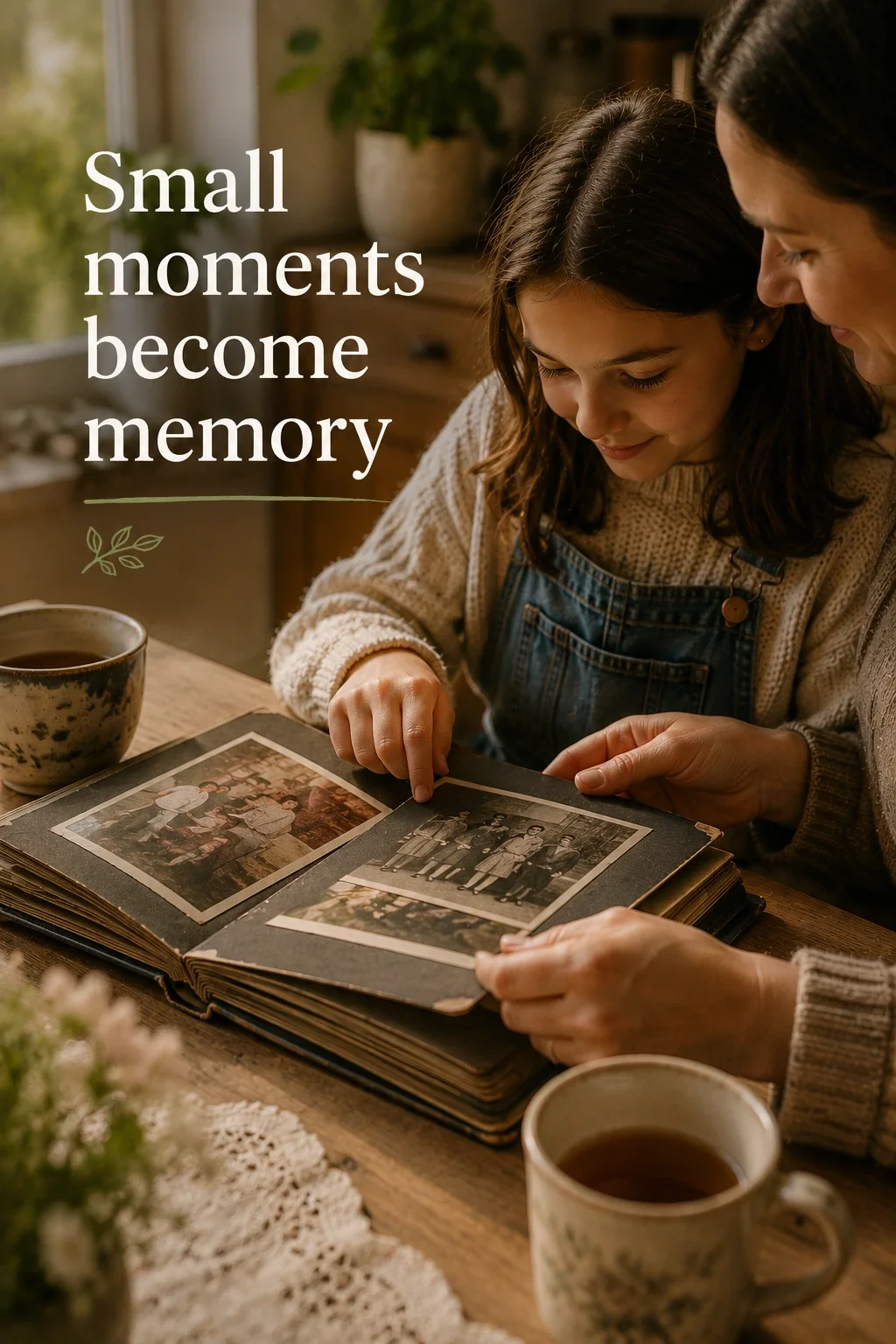
Day 4: Look through one old photo and tell the story behind it.
Day 5: Do one ordinary chore together.
Day 6: Make one small plan: a walk, call, visit, or dinner.
Day 7: Say one thing you appreciate out loud.
None of these actions is dramatic. That is the point.
Small actions become family culture when repeated.
The Quiet Legacy of One Hour More
At the end of life, few people wish they had spent more evenings distracted beside the people they loved.
We remember presence.
We remember who came?
Who called?
Who listened?
Who stayed?
Who made the soup?
Who saved a seat?
Who asked the question that let us finally tell the truth?
Spending time with family is important because time is the medium through which love becomes real. It turns affection into memory, memory into identity, and identity into strength.
You do not need to solve every family tension today. You do not need to create perfect traditions. You do not need to become endlessly available.
Begin with one hour more.
One protected moment.
One shared meal.
One walk.
One call.
One apology.
One laugh.
One story.
One person you choose to be fully present with.
That is how relationships are nurtured.
That is how families become stronger.
That is how meaningful change begins.
Start With One.
📘 Get the book: Start With One: Small Steps to a Big Change → a.co/d/5uoSTEJ
The Heart of Home: Source Links Behind “How is Spending Time With Family Important?”
American Psychological Association — Manage Stress with Social Support
https://www.apa.org/topics/stress/manage-social-supportPubMed — Family Meals and Child/Adolescent Health Outcomes
https://pubmed.ncbi.nlm.nih.gov/37447168/National Library of Medicine / PMC — Family Meals and Child Well-Being
https://pmc.ncbi.nlm.nih.gov/articles/PMC10346164/American Psychiatric Association — Social Connections and Mental Well-Being
https://www.psychiatry.org/news-room/apa-blogs/social-connections-key-to-maintaining-mental-wellZap Zone — Benefits of Spending Time With Family
https://zapzone.ca/blog/benefits-of-spending-time-with-family/Highland Springs Clinic — Benefits of Spending Time With Family
https://highlandspringsclinic.org/the-top-ten-benefits-of-spending-time-with-familyResources to Recover — Mental Health Benefits of Time With Friends and Family
https://www.rtor.org/2022/06/13/the-mental-health-benefits-of-spending-quality-time-with-friends-and-family/University Health — Why Family Time Matters
https://www.universityhealth.com/blog/family-timeHindustan Times — Ways Spending Time With Family Can Boost Well-Being
https://www.hindustantimes.com/lifestyle/relationships/international-day-of-families-12-ways-spending-time-with-family-can-boost-wellbeing-101684077143170.htmlHMH — Benefits of Students Spending More Time With Family
https://www.hmhco.com/blog/the-benefits-of-students-spending-more-time-with-familyStart With One — Source Book Inspiration
Start With One: Small Steps to a Big Change
Relevant theme: “One Hour More: Nurturing the Heart of Relationships.”