What are the 10 Benefits of Sleep?
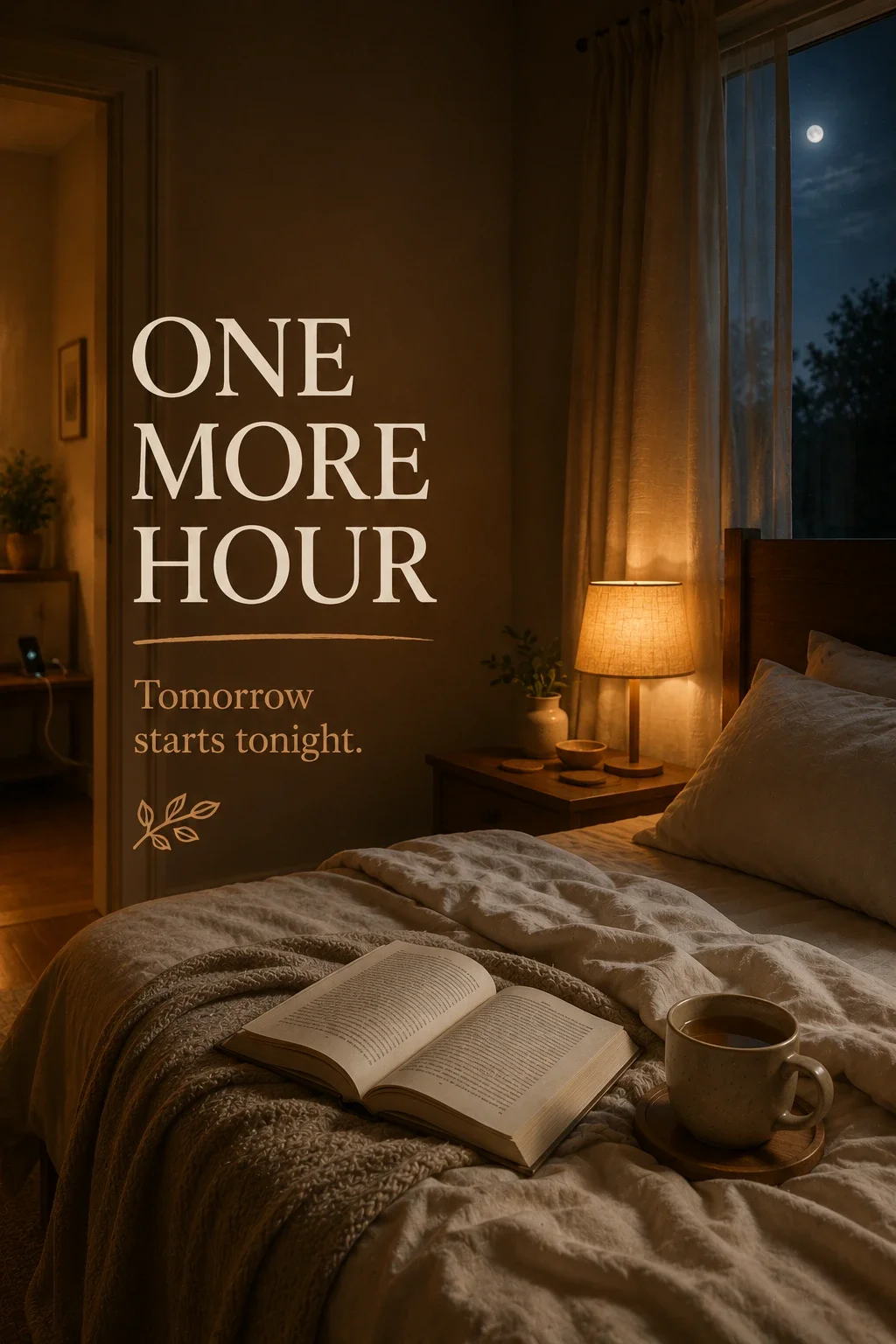
What are the 10 Benefits of Sleep?
One More Hour of Sleep: Unlocking the Power of Quality Rest
Sleep supports memory, concentration, emotional balance, immunity, heart health, metabolism, appetite regulation, physical recovery, personal safety, and long-term well-being. Most adults need at least seven hours of good-quality sleep each night, although individual needs vary. (CDC)
Sleep is often treated as time taken away from achievement.
We finish one more task, watch one more episode, or answer one more message. Then we expect an exhausted mind to perform at full capacity the next morning.
But sleep is not an inactive time.
While we rest, the brain processes information, the body repairs itself, the immune system performs essential work, and the heart and metabolism receive support. Sleep affects attention, learning, memory, physical health, quality of life, and safety. (NHLBI, NIH)
Better sleep does not require a perfect transformation tonight.
It can begin with one earlier bedtime, one phone placed outside the room, or one more hour of rest.
Start With One.
The 10 Benefits of Sleep
1. Better Memory and Learning
Sleep helps the brain process and retain new information.
It supports learning, memory formation, and the ability to recall what we have read, practised, or experienced. Poor-quality sleep can make it harder to concentrate, absorb information, and remember important details. (NHLBI, NIH)
Sleep is not time taken away from learning.
It is part of the learning process.
2. Sharper Focus and Decision-Making
Adequate sleep supports attention, problem-solving, judgment, and productivity.
When we are tired, reaction time slows, details are missed, and errors become more likely. Spending more hours awake may create additional working time, but it does not guarantee better work.
Sometimes the most productive decision is to stop.
3. Greater Emotional Balance
Sleep helps regulate mood and emotional reactions.
After a poor night, small frustrations may feel larger. Patience can decrease, stress can rise, and difficult situations can become harder to manage.
Good sleep does not remove life’s challenges.
It gives us a steadier nervous system with which to face them.
4. Stronger Immune Support
Sleep supports the immune system’s ability to defend the body.
Too little sleep can affect immune function, increase inflammation, and make it more difficult for the body to respond effectively to illness. (NHLBI, NIH)
Sleep does not replace medical care, nutrition, movement, or vaccination.
It strengthens the foundation beneath them.
5. Better Heart Health
During healthy sleep, heart rate and blood pressure generally decrease.
This nightly period of lower demand helps support the heart and blood vessels. Consistently getting too little sleep is associated with higher risks of high blood pressure, heart disease, heart attack, and stroke. (CDC)
One late night is part of life.
Chronic sleep loss is a health pattern.
6. Healthier Blood-Sugar Regulation
Sleep influences how the body processes glucose and responds to insulin.
Regular sleep deficiency is associated with metabolic problems, including a greater risk of obesity and type 2 diabetes. (NHLBI, NIH)
Food and exercise matter greatly.
Sleep helps the body respond to both.
7. Improved Appetite Control
Sleep helps regulate hormones involved in hunger and fullness.
When people are sleep-deprived, they may experience stronger cravings, lower energy, and more difficulty making deliberate food choices.
Sleep is not a weight-loss treatment.
But being rested can make healthy decisions easier to maintain.
8. Stronger Physical Recovery
Sleep supports muscle repair, coordination, energy restoration, and physical performance.
This matters not only to athletes. It matters to anyone who exercises, works physically, cares for children, recovers from illness, or wants to move through the day with greater strength and control.
Effort creates the demand.
Sleep supports the recovery.
9. Fewer Mistakes and Accidents
Fatigue impairs attention, judgment, and reaction time.
That raises the risk of errors while driving, working around equipment, providing care, or completing tasks that require sustained concentration. Insufficient sleep is linked to vehicle crashes, workplace errors, and medical mistakes. (CDC)
One danger of fatigue is that we do not always recognize how impaired we have become.
Feeling accustomed to exhaustion does not mean performance has returned to normal.
10. Better Long-Term Health
Sleep affects nearly every major system in the body.
Consistently getting enough good-quality sleep supports mental health, physical health, safety, and quality of life. Long-term sleep deficiency is associated with heart disease, obesity, high blood pressure, diabetes, stroke, anxiety, and depression. (NHLBI, NIH)
The value of sleep is greater than feeling less tired.
It helps preserve our ability to think, work, heal, connect, and remain independent.

How Many Hours of Sleep Do I Need?
Most adults need at least seven hours of sleep each night. Some people need closer to eight or nine hours, depending on their age, health, activity level, and individual biology. (CDC)
Sleep quality also matters.
Eight hours in bed may not be restorative when sleep is repeatedly interrupted by stress, pain, alcohol, noise, medication, insomnia, or sleep apnea.
Signs that sleep may not be restorative include:
Persistent daytime exhaustion
Difficulty concentrating
Irritability
Loud snoring or gasping
Morning headaches
Repeated nighttime waking
Falling asleep unintentionally during the day
Persistent fatigue despite adequate time in bed should be discussed with a healthcare professional.
Is Five Hours of Sleep Enough?
For most adults, five hours is not enough regularly.
Current guidance recommends at least seven hours for healthy adults. Habitually sleeping less than that is considered short sleep and is associated with poorer physical health, mental health, concentration, and daily functioning. (CDC)
An occasional short night may happen.
The concern is when five hours becomes the normal routine.
What are the five major benefits of Good Sleep?
The five broadest benefits are:
Better memory and concentration
More stable mood and stress tolerance
Stronger immune and physical recovery
Better heart and metabolic health
Safer judgment and faster reaction time
These categories summarize the wider effects sleep has across the brain and body.
Why Is Sleep So Powerful?
Sleep is powerful because it is not one isolated health behaviour.
It influences the brain, cardiovascular system, immune system, metabolism, hormones, emotions, and physical recovery at the same time. NHLBI notes that sleep and circadian rhythms affect the functioning of nearly every cell and organ in the body. (NHLBI, NIH)
Few daily habits affect so many systems simultaneously.
That is why even a modest improvement in sleep may influence several areas of life at once.
Can One More Hour of Sleep Make a Difference?
It may be especially for someone who regularly sleeps less than their body needs.
A person sleeping six hours instead of seven loses approximately seven hours of sleep each week, the equivalent of almost an entire night.
One extra hour will not solve every health or productivity problem. But it may support better alertness, patience, concentration, recovery, and decision-making.
The greatest benefit comes when that extra hour becomes part of a consistent pattern.
Five Ways to Sleep Better
Keep a Consistent Schedule
Try to go to bed and wake at roughly the same time each day. Consistency helps reinforce the body’s sleep-wake rhythm. (Mayo Clinic)
Create a Short Wind-Down Routine
Lower the lights, finish work, stretch, read, shower, or write down tomorrow’s tasks.
The routine does not need to be elaborate.
It needs to be repeatable.
Protect the Bedroom
A cool, dark, quiet room generally supports better sleep.
Move the phone away from the bed and reduce unnecessary light, noise, and interruptions.
Watch Caffeine and Alcohol
Caffeine can interfere with sleep for hours. Alcohol may initially cause drowsiness, but it can disrupt sleep later in the night. (Mayo Clinic)
Falling asleep quickly is not always the same as sleeping well.
Get Daylight and Movement
Daytime light and regular physical activity help support the body’s internal clock and natural sleep pressure.
Better nights often begin with better daytime signals.
Start With One Better Night
Do not try to perfect your entire sleep routine tonight.
Choose one action:
Go to bed 30 minutes earlier.
Charge your phone outside the bedroom.
Stop caffeine earlier.
Set a consistent wake time.
Darken the room.
Create a ten-minute evening ritual.
Seek medical advice for persistent fatigue or loud snoring.
Small improvements are easier to repeat.
Repeated improvements become a system.
Sleep is not the opposite of ambition.
It is part of the foundation that makes ambition sustainable.
One earlier shutdown.
One quieter room.
One promise kept to your body.
One more hour of sleep.
Start With One better night.
📘 Get the book: Start With One: Small Steps to a Big Change → a.co/d/5uoSTEJ
Sleep Smarter, Live Stronger: Sources Behind “What Are 10 Benefits of Sleep?”
CDC — About Sleep and Why It Matters
https://www.cdc.gov/sleep/about/index.htmlNational Heart, Lung, and Blood Institute — Why Is Sleep Important?
https://www.nhlbi.nih.gov/health/sleep/why-sleep-importantNational Heart, Lung, and Blood Institute — Sleep Deprivation and Deficiency
https://www.nhlbi.nih.gov/health/sleep-deprivationCDC — Sleep and Heart Health
https://www.cdc.gov/heart-disease/about/sleep-and-heart-health.htmlCDC — Adult Sleep Facts and Statistics
https://www.cdc.gov/sleep/data-research/facts-stats/adults-sleep-facts-and-stats.htmlNational Institute of Neurological Disorders and Stroke — Understanding Sleep
https://www.ninds.nih.gov/health-information/public-education/brain-basics/brain-basics-understanding-sleepNational Library of Medicine / PMC — Sleep, Memory, and Learning
https://pmc.ncbi.nlm.nih.gov/articles/PMC11756301/National Library of Medicine / PMC — Sleep Deprivation and Cognitive Performance
https://pmc.ncbi.nlm.nih.gov/articles/PMC10155483/National Library of Medicine / PMC — Sleep and Immune Function
https://pmc.ncbi.nlm.nih.gov/articles/PMC8602722/National Heart, Lung, and Blood Institute — Sleep and Heart-Healthy Living
https://www.nhlbi.nih.gov/health/heart-healthy-living/sleepNational Heart, Lung, and Blood Institute — Sleep Research and Health
https://www.nhlbi.nih.gov/news/2018/sweet-dreams-researchers-explore-link-between-sleep-and-healthMayo Clinic — Better Sleep: Practical Sleep Habits
https://www.mayoclinic.org/healthy-lifestyle/adult-health/in-depth/sleep/art-20048379Harvard Medical School — Sleep and Health Education
https://sleep.hms.harvard.edu/education-training/public-education/sleep-and-health-education-program/sleep-health-education-41Sleep Foundation — Benefits of Sleep
https://www.sleepfoundation.org/how-sleep-works/benefits-of-sleepNational Sleep Foundation — Sleep Health and Flourishing in Life
https://www.thensf.org/connection-between-sleep-health-and-flourishing-in-life/Start With One — Source Book Inspiration
Start With One: Small Steps to a Big Change
Relevant theme: “One More Hour of Sleep: Unlocking the Power of Quality Rest”