What Does the Sauna Do for Your Body?
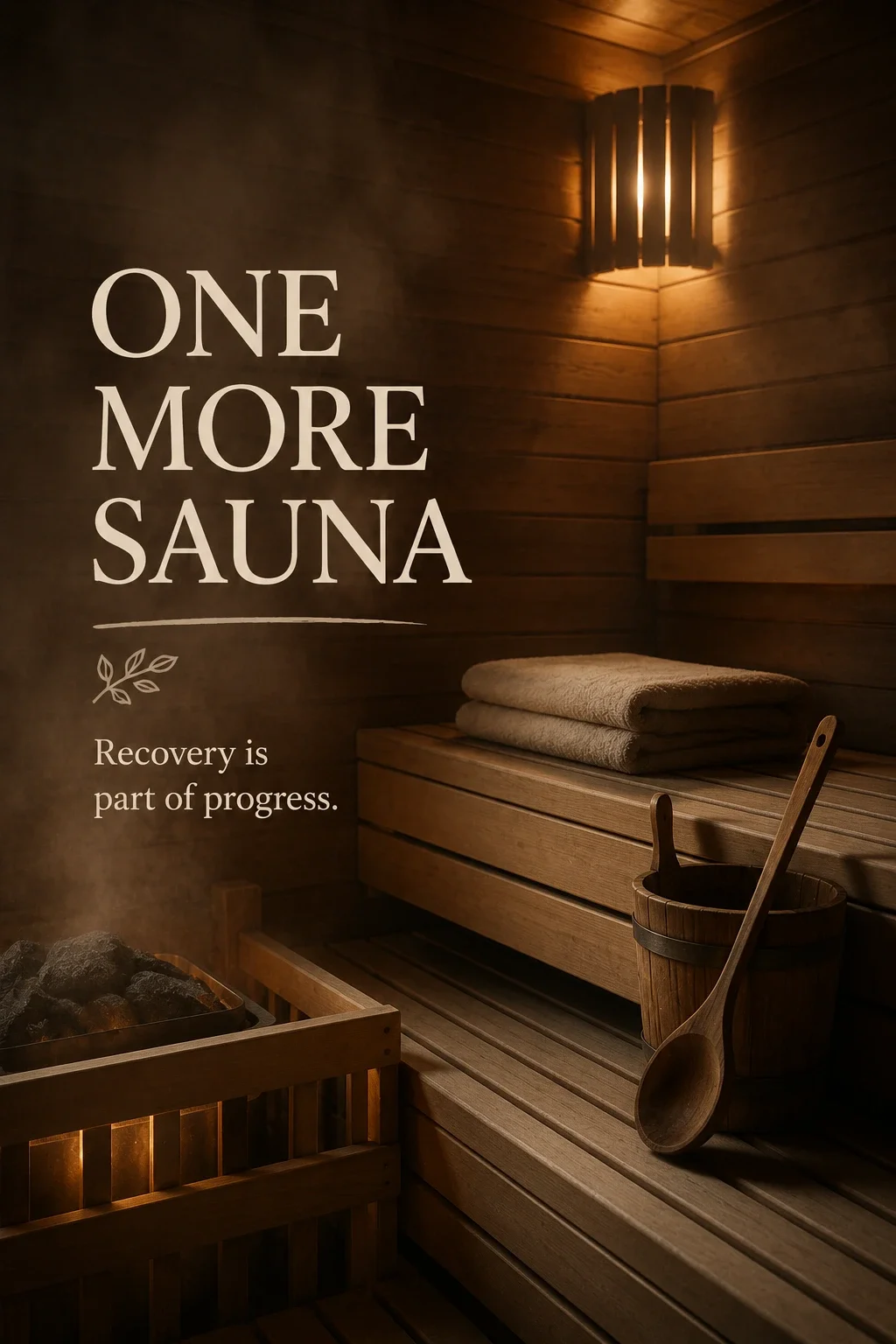
What Does the Sauna Do for Your Body?
One More Sauna: Harnessing Heat for Health and Renewal
A sauna temporarily raises your skin and core temperature, increases heart rate, widens blood vessels, redirects blood toward the skin, and triggers heavy sweating as the body works to cool itself. For many healthy adults, controlled heat exposure can support relaxation, ease sore muscles, reduce stiffness, and complement cardiovascular health. Regular sauna use has also been associated with lower rates of cardiovascular disease and cognitive decline, although much of that long-term evidence is observational and does not prove that sauna use alone caused the benefits. (Cleveland Clinic)
There is a point in a sauna when the day begins to loosen its grip.
The phone is outside. The noise is muted. The heat makes multitasking impossible. Your breathing becomes more deliberate, your muscles soften, and the thoughts that seemed urgent twenty minutes earlier lose some of their authority.
Nothing on your calendar has changed.
But your relationship to the moment has.
That may be the most immediate gift of sauna bathing: it creates a room where the body cannot pretend it is not carrying tension. Heat brings everything to the surface: perspiration, fatigue, impatience, restlessness, and then asks you to sit still long enough to notice.
Sauna use has become part of a much wider wellness conversation, promoted for heart health, recovery, sleep, stress, immunity, longevity, “detoxification,” and weight loss. Some claims are supported by promising research. Some are exaggerated. Others confuse association with proof.
The useful truth is more grounded.
A sauna is not a cure. It does not replace exercise, sleep, nutrition, relationships, or medical treatment. But used safely, it can be a meaningful recovery ritual: one protected interval of warmth, quiet, and physiological challenge.
In Start With One, “One More Sauna” presents heat as an opportunity for renewal, a practice of tending to the body and creating an inner sanctuary rather than chasing another extreme wellness achievement.
That is the spirit of this article.
Not more heat for the sake of more.
One thoughtful session.
One quieter nervous system.
One choice to recover before returning to the world.
Start With One more sauna.
What Happens to Your Body in a Sauna?
A traditional sauna exposes the body to high ambient heat, usually with relatively low humidity. Infrared saunas operate at lower air temperatures and use infrared energy to warm the body more directly. Steam rooms use lower temperatures but much higher humidity, which reduces the body’s ability to cool itself through evaporation and can make the heat feel more intense.
Although these experiences differ, they share a basic physiological effect: your body must work to maintain a safe internal temperature.
As you heat up:
Blood vessels near the skin widen.
Blood flow to the skin increases.
Heart rate rises.
Sweating increases.
The cardiovascular system works harder to move heat away from the body’s core.
Fluid and electrolytes are lost through perspiration.
Cleveland Clinic describes sauna heat as producing physiological changes that resemble some aspects of exercise, including increased heart rate, sweating, and vascular effects. But a sauna does not reproduce the muscular, metabolic, bone, or cardiorespiratory training benefits of actual physical activity. It may complement exercise; it cannot replace it. (Cleveland Clinic)
This distinction matters.
A sauna can challenge the circulatory system without asking the legs to run or the joints to bear weight. That may feel restorative after exercise or useful for someone seeking relaxation. But sitting in the heat is not the same as building strength, endurance, balance, or mobility.
Think of sauna as recovery infrastructure, not a substitute for movement.
What Does a Sauna Do for Your Heart and Circulation?
Heat causes blood vessels to widen, which increases blood flow to the skin and can temporarily alter blood pressure. Heart rate also rises as the body tries to release heat.
Research on Finnish-style sauna bathing has found associations between frequent sauna use and lower cardiovascular and all-cause mortality. One prospective cohort study reported that sauna bathing frequency was associated with reduced cardiovascular mortality in men and women. Other studies have linked frequent use with lower risks of hypertension, sudden cardiac death, and stroke. (PMC)
These findings are compelling, but they require context.
Much of the strongest long-term evidence comes from observational Finnish cohorts. People who use saunas regularly may also differ in physical activity, income, diet, social habits, healthcare access, stress, or other lifestyle factors. Researchers try to adjust for those variables, but observational studies cannot prove that sauna use itself produced the lower risk.
Smaller intervention studies offer additional support. One randomized study found that adding regular sauna bathing to an exercise program produced greater improvements in cardiorespiratory fitness, systolic blood pressure, and total cholesterol than exercise alone. The authors described sauna as a potentially valuable complement to exercise while noting the need for more work on ideal frequency and dose. (PMC)
The fairest conclusion is this:
Regular sauna use may support cardiovascular health, particularly when paired with exercise and other healthy behaviours. It should be viewed as an addition to a healthy life, not insurance against an unhealthy one.
Does a Sauna Lower Blood Pressure?
Sauna use may temporarily lower blood pressure after a session because heat widens blood vessels. Regular use has also been associated with improved arterial function and a lower risk of developing hypertension. (PMC)
But heat does not affect everyone in the same way.
Some people become lightheaded as blood pressure falls. Others may experience cardiovascular strain as heart rate rises. Medications, dehydration, age, alcohol, underlying heart disease, and the transition from sitting to standing can all change the response.
People with controlled high blood pressure may be able to use a sauna with their clinician’s approval. Those with unstable cardiovascular disease or a history of fainting need greater caution. The American Heart Association advises people with high blood pressure not to alternate rapidly between saunas or hot tubs and cold water because abrupt temperature changes can increase blood pressure. It also warns against mixing alcohol and sauna use. (www.heart.org)
A practical rule: stand slowly when leaving, cool down gradually, and never interpret dizziness as evidence that the session is “working.”
Dizziness is a signal to stop.
Can Sauna Use Improve Heart Health as Much as Exercise?
No.
A sauna raises heart rate and alters circulation, but it does not provide the full-body adaptations of exercise. It does not progressively strengthen skeletal muscle, load the bones, improve coordination, or create the same energy demands as walking, cycling, swimming, or resistance training.
The phrase “mimics exercise” can be useful only in a narrow physiological sense. Heat and exercise can both raise heart rate and increase blood flow. They are not interchangeable.
The strongest routine is not a sauna instead of exercise.
It is movement, followed by thoughtful recovery.
One walk.
One strength session.
One sauna.
One good night’s sleep.
Health is usually built through systems, not singular hacks.
Does Sauna Help Muscle Recovery and Pain?
Heat can feel especially helpful after physical effort because it increases local blood flow and helps muscles relax. Cleveland Clinic notes that sauna use may soothe sore muscles and that small studies suggest possible improvements in chronic pain, muscle spasms, back pain, rheumatoid arthritis, and ankylosing spondylitis. However, the evidence base remains limited. (Cleveland Clinic)
Mayo Clinic also reports that infrared sauna research has explored conditions including high blood pressure, heart failure, dementia, headache, type 2 diabetes, and arthritis, but larger and more rigorous studies are still needed to confirm many proposed benefits. (Mayo Clinic)
For an active person, a sauna may be useful as part of a recovery routine because it encourages stillness and can reduce the sensation of muscular tension. But it should not be used to push through a suspected injury.
Heat may feel soothing for:
General post-exercise tightness
Chronic stiffness
Mild muscle soreness
Relaxation after a demanding day
Seek assessment rather than relying on sauna if pain is sharp, severe, unexplained, accompanied by swelling or weakness, or linked to a recent injury.
Relief and healing are not always the same thing.
Does Sauna Help With Stress, Mood, and Sleep?
The post-sauna calm is not imaginary.
During heat exposure, the body enters a state of physiological stress. Afterward, many users experience relaxation as the session ends, breathing settles, and body temperature gradually falls. Cleveland Clinic lists stress reduction among sauna’s potential benefits, while small studies have also explored changes in mood and brain activity after sauna bathing. (Cleveland Clinic)
Sauna may also support sleep indirectly.
A warm session can become a transition ritual between activity and rest. It removes screens, slows the pace, and may create a cooling response afterward that feels compatible with bedtime. However, responses differ. Some people find late heat exposure relaxing; others feel overstimulated, thirsty, or uncomfortable.
The more reliable sleep benefit may come from the ritual itself:
You stop working.
You put the phone away.
You sit quietly.
You breathe.
You cool down.
You prepare for rest.
Sometimes the body needs a threshold between the day and the night.
A sauna can provide one.
Does Sauna Reduce the Risk of Dementia or Alzheimer’s Disease?
Frequent sauna bathing has been associated with lower rates of dementia and Alzheimer’s disease in long-term Finnish studies. A review of the evidence noted that moderate and high sauna frequency were associated with lower dementia risk among middle-aged men followed for roughly two decades. (PMC)
This is promising, not conclusive.
The studies show an association. They do not establish that sauna directly prevents dementia. Other lifestyle factors may contribute, and much of the research comes from specific populations with a long cultural history of sauna use.
Cleveland Clinic takes a similarly careful position: regular sauna use may be linked with a lower risk of dementia and Alzheimer’s disease, but more research is required to understand whether the relationship is causal and how it might work. (Cleveland Clinic)
Sauna should therefore not be marketed as a dementia-prevention treatment.
A more responsible interpretation is that it may fit within a brain-healthy lifestyle that also includes exercise, sleep, social connection, blood-pressure management, learning, nutrition, and appropriate medical care.
Does Sauna Boost Immunity?
Some research has examined whether sauna use influences inflammation, immune markers, or the frequency of respiratory illnesses. A clinical review found possible associations with fewer respiratory conditions and improvements in some pulmonary symptoms, while emphasizing that the evidence for many claimed effects remains incomplete. (PMC)
Sauna does not “kill” an infection inside the body, and it should not be used to sweat out a fever.
Using a sauna while sick may worsen dehydration or dizziness, and entering a shared facility while contagious can expose others.
The immune system is not strengthened by punishing it. It is supported through sleep, nutrition, vaccination where appropriate, physical activity, stress management, hygiene, and healthcare.
Sauna may be one small supportive practice.
It is not an antiviral chamber.
Does a Sauna Detox Your Body?
Not in the way many advertisements suggest.
Sweat contains mostly water, along with salts and small quantities of other substances. Your liver, kidneys, lungs, and digestive system perform the body’s primary detoxification work.
Claims that sauna sessions purge large quantities of heavy metals or broadly “cleanse” the body are not supported strongly enough to justify the marketing language. Cleveland Clinic advises avoiding therapies that promise to remove toxins or cure disease, and a clinical review of dry sauna bathing notes that rigorous evidence for many commonly advertised claims, including detoxification, is incomplete. (Cleveland Clinic)
What a sauna can do is make you sweat.
That may feel cleansing. It may encourage you to shower, hydrate, breathe, and slow down. Those experiences are real without needing to invent a biological purge.
Wellness becomes more trustworthy when we allow a good practice to be good without turning it into magic.
Do Saunas Burn Fat?
A sauna does not burn a meaningful amount of body fat by itself.
You may weigh less immediately after a session because you have lost water through sweat. Once you drink and restore hydration, most or all of that weight returns.
Heart rate and energy expenditure may rise modestly in the heat, but not enough to make sauna a reliable fat-loss strategy. Long-term fat loss is driven primarily by sustained energy balance, nutrition, physical activity, sleep, hormones, medical factors, and behaviour.
Sauna may support those efforts indirectly if it improves relaxation, recovery, or adherence to a healthy routine. But sweating is not the same as burning fat.
The number on the scale after a sauna measures fluid loss, not transformation.
How Long Should You Sit in a Sauna?
For many healthy adults, about 10 to 20 minutes is a reasonable session length, but there is no universal ideal.
Beginners should start closer to 5 to 10 minutes, especially in a hot traditional sauna. Cleveland Clinic advises beginning infrared sauna sessions at a lower temperature for five to ten minutes and keeping sessions below 30 minutes, even for experienced users. (Cleveland Clinic)
The safe duration depends on:
Sauna temperature
Humidity
Your health and medications
Your heat tolerance
Your hydration status
Whether you exercised beforehand
Whether you are using a traditional, steam, or infrared sauna
Whether you are alone
Leave immediately if you feel dizzy, nauseated, confused, weak, unusually short of breath, develop chest discomfort, or notice a pounding or irregular heartbeat.
A timer is not a command to remain inside.
Your body has veto power.

How Often Is Sauna Good for You?
No medically established frequency is ideal for everyone.
Some long-term observational studies found the strongest associations among people using traditional Finnish saunas four to seven times per week. That does not mean every person should copy that schedule, nor does it prove that high-frequency sauna use caused the improved outcomes. (PMC)
Cleveland Clinic suggests limiting infrared sauna visits to around three or four times weekly, particularly as you learn how your body responds. (Cleveland Clinic)
A practical progression might look like this:
Beginner: one short session per week
Comfortable user: two or three sessions per week
Experienced user: more frequent use only when well tolerated, well hydrated, and medically appropriate
Frequency should serve recovery, not become another scorecard.
A person who uses a sauna twice a week and feels restored may be doing more for their well-being than someone forcing seven sessions to meet an internet protocol.
Consistency matters.
So does restraint.
What Is the “200 Rule” for Saunas?
The term “200 rule” is not a clinical medical standard, and it is used inconsistently online.
One common version says that the sauna’s temperature in degrees Fahrenheit plus its relative humidity percentage should total approximately 200. For example, 170°F with 30% humidity would equal 200. This is presented as a comfort guideline for balancing heat and humidity in a traditional sauna. (Divine Saunas)
Another online version adds temperature in Fahrenheit to the number of minutes spent inside. That interpretation appears on commercial sauna sites but is not a validated medical safety rule. (Sauna Plunge)
Neither formula should override physical symptoms, professional advice, or the equipment manufacturer’s instructions.
Humidity, ventilation, sauna type, thermometer placement, age, medication, health status, acclimatization, and individual response all matter. A tidy formula cannot account for them.
The safest “rule” is simpler:
Use moderate heat.
Begin with short sessions.
Hydrate.
Never mix sauna with alcohol.
Leave before symptoms become severe.
Should You Use a Sauna if You Are Taking Creatine?
For most healthy adults, taking creatine does not automatically mean sauna use is unsafe.
Research reviews have found no evidence that recommended creatine supplementation causes dehydration, muscle cramping, or impaired heat tolerance. Some evidence suggests it may support thermoregulation in exercise settings rather than worsen it. (PMC)
The relevant issue is not a dangerous creatine-sauna interaction. It is total fluid loss.
A sauna causes sweating. A workout causes sweating. Exercising in heat and then entering a sauna can increase fluid and electrolyte losses further. Anyone using creatine should follow ordinary hydration principles rather than assume the supplement either protects them or places them in danger.
Practical precautions include:
Begin the session well hydrated.
Replace fluids afterward.
Consider electrolytes after prolonged exercise or heavy sweating.
Avoid sauna use if you already feel dehydrated, ill, dizzy, or overheated.
Seek medical guidance if you have kidney disease or another condition affecting fluid balance.
Creatine does not create a special exemption from heat safety.
Neither does it create a special prohibition.
Traditional Sauna, Infrared Sauna, or Steam Room: Which Is Best?
There is no single best form for everyone.
Traditional dry sauna
Traditional saunas use heated air, often at relatively high temperatures and low humidity. Water may be poured over rocks to create a brief burst of steam.
This is the format used in many of the Finnish observational studies associated with cardiovascular and cognitive outcomes. Those results should not automatically be assumed to apply equally to every form of heat therapy.
Infrared sauna
Infrared saunas operate at lower air temperatures, generally around 45°C to 60°C, and use infrared emitters to warm the body. Mayo Clinic notes that preliminary studies have explored possible benefits, but larger, more precise research is needed. (Mayo Clinic)
Infrared may feel easier to tolerate for people who dislike very hot air.
Steam room
Steam rooms use high humidity. Because perspiration cannot evaporate as efficiently, the heat can feel intense at a lower temperature.
Some people enjoy steam for perceived respiratory comfort, but those who are sensitive to humidity, temperature changes, or breathing difficulties should seek medical guidance.
The best option is the one that:
You tolerate well
Is clean and properly maintained
Allows temperature control
Supports your purpose
Does not trigger concerning symptoms
Fits your medical needs
The type of sauna matters less than safe use and realistic expectations.
Can Sauna Help Your Skin?
Heat increases blood flow to the skin, and sweating may temporarily make the skin feel flushed, soft, or refreshed. A shower afterward can remove sweat, oils, and residue.
But a sauna does not “open” pores like doors, and sweating is not a substitute for cleansing or dermatological treatment. Heat and perspiration may aggravate some skin conditions, including rosacea, eczema, heat rash, or irritation.
People with sensitive skin should use shorter sessions, cool gradually, shower afterward, and moisturize as needed.
Healthy skin is not measured by how much it sweats.
Is Sauna Safe After a Workout?
For a healthy, hydrated person, a short sauna after moderate exercise may feel relaxing and can complement a recovery routine. One trial found benefits when regular sauna use was combined with exercise. (PMC)
However, intense exercise already raises body temperature and fluid loss. Entering a very hot sauna immediately afterward adds another heat load.
Before going in:
Allow your heart rate to settle.
Drink water.
Cool down briefly.
Avoid the sauna if you feel faint, nauseated, unusually fatigued, or overheated.
Keep the first post-exercise session short.
The goal is recovery, not a second endurance event.
Sauna and Cold Plunges: Is Contrast Therapy Safe?
Alternating heat and cold can feel invigorating, but the rapid switch places additional demands on blood vessels, blood pressure, breathing, and heart rate.
The American Heart Association advises people with high blood pressure not to move rapidly between saunas or hot tubs and cold water because it can increase blood pressure. Sudden cold immersion also produces a cold-shock response, which can cause gasping, hyperventilation, and abrupt cardiovascular changes. (www.heart.org)
Anyone with cardiovascular disease, arrhythmias, a history of fainting, blood-pressure problems, or circulation disorders should consult a clinician before attempting contrast therapy.
For those cleared to try it:
Do not do it alone.
Avoid extreme temperatures.
Transition gradually.
Keep cold exposure brief.
Never hyperventilate or deliberately hold your breath in water.
Stop if you feel dizzy, confused, weak, or unwell.
Dramatic temperature swings may look impressive online.
Safety rarely does.
Choose safety.
Who Should Ask a Doctor Before Using a Sauna?
Saunas are generally well tolerated by many healthy adults, but medical guidance is important if you have:
Unstable angina
A recent heart attack
Uncontrolled high or low blood pressure
Serious arrhythmias
Advanced heart failure
A condition that impairs sweating
Kidney disease or fluid restrictions
A history of fainting
Neurological conditions affecting temperature regulation
Acute illness or fever
Pregnancy
Medications that alter blood pressure, heart rate, sweating, or hydration
A recent review of sauna use in ischemic heart disease notes potential cardiovascular benefits but says unstable angina requires strict avoidance because heat can increase cardiac demand. (PMC)
Cleveland Clinic advises avoiding saunas during pregnancy because overheating and dehydration can create risks. (Cleveland Clinic)
Do not use a sauna while intoxicated. Alcohol can worsen dehydration, impair judgment, and increase the likelihood of fainting or staying too long. (www.heart.org)
A Safer Start With One Sauna Routine
You do not need an advanced protocol.
You need a modest beginning and enough self-awareness to stop.
Before the sauna
Drink water during the hours leading up to the session.
Avoid alcohol.
Do not enter if you are ill, feverish, dehydrated, dizzy, or already overheated.
Ask a clinician first if you have a relevant medical condition.
During the sauna
Begin with five to ten minutes.
Sit on a lower bench if possible, where the temperature is usually less intense.
Breathe normally. Avoid breath-holding challenges.
Do not treat discomfort as a competition.
Leave when your body asks, not when a social media timer tells you to.
After the sauna
Stand slowly.
Cool down gradually.
Drink water.
Replace electrolytes when appropriate after prolonged exercise or heavy sweating.
Allow your heart rate and body temperature to return toward normal before another round.
Notice how you feel later that evening and the next morning.
The session is not successful because you endured the most heat.
It is successful because you left feeling restored rather than depleted.
The One More Sauna Framework
The Start With One philosophy turns the sauna from a wellness product into a practice of attention.
Enter with one purpose
Recovery. Reflection. Quiet. Rest. Connection.
Do not ask one session to accomplish everything.
Release one source of noise.
Leave the phone outside.
Let the heat make space where constant input used to be.
Notice one signal from the body
Tight shoulders. Fast breathing. Thirst. Restlessness. Fatigue.
Awareness is more useful than endurance.
Hold one honest question.
What am I carrying that I no longer need to carry into the rest of this day?
Do not force an answer.
Leave with one intention.
Drink water. Call someone. Go to bed earlier. Take a walk. Speak more gently. Begin again tomorrow.
Renewal matters most when it follows you out of the room.
Frequently Asked Questions
What does the sauna do for your body?
A sauna raises body temperature, heart rate, skin blood flow, and sweating. It may reduce stress, soothe sore muscles, ease some chronic pain, and complement cardiovascular health. Frequent use has been associated with lower cardiovascular and dementia risk, but the long-term evidence is largely observational. (Cleveland Clinic)
How long should you sit in a sauna?
Beginners can start with five to ten minutes. Many healthy, experienced users stay approximately 10 to 20 minutes. Cleveland Clinic advises keeping infrared sessions below 30 minutes. Leave sooner if you feel dizzy, nauseated, weak, confused, short of breath, or have chest discomfort. (Cleveland Clinic)
How often is a sauna good for you?
There is no universal requirement. Beginners can start once weekly and gradually increase to two or three sessions if well tolerated. Observational Finnish studies found stronger health associations among people using saunas four to seven times weekly, but those findings do not prove that everyone needs that frequency. (PMC)
Should you use the sauna if you are taking creatine?
Healthy adults can generally use a sauna while taking creatine. Evidence does not support the claim that recommended creatine use causes dehydration or impaired heat tolerance. Sauna still causes fluid loss, so begin hydrated, replace fluids afterward, and seek medical advice if you have kidney disease or another condition affecting fluid balance. (PMC)
Do saunas burn fat?
Not meaningfully on their own. The immediate drop in scale weight is mainly water lost through sweat and returns with rehydration. Sauna can support relaxation recovery,y but does not replace nutrition and exercise for fat loss.
What is the 200 rule for saunas?
The most common version says sauna temperature in Fahrenheit plus relative humidity should total about 200. It is an informal comfort guideline, not a medically validated safety rule. Another online version involving temperature plus minutes is inconsistent and should not guide health decisions. (Divine Saunas)
Does a sauna detox your body?
Sweating removes water, salt, and small quantities of other substances, but the liver and kidneys perform the body’s primary detoxification. Claims that sauna use broadly purges toxins are overstated. (Cleveland Clinic)
Is a sauna good after exercise?
It may help relaxation and perceived recovery when you are healthy and hydrated. Allow your body to cool down first, drink water, and keep the session short after intense exercise. Sauna complements training; it does not replace recovery basics such as food, fluids, sleep, and rest.
The Heat Is Not the Whole Story
A sauna can raise heart rate, widen blood vessels, encourage sweating, ease muscular tension, and create a profound sense of calm. Regular use may support cardiovascular health, and promising research continues into its effects on pain, cognition, sleep, and recovery.
But the sauna’s value cannot be reduced to numbers.
There is also the simple importance of stopping.
For ten minutes, you are not answering.
Not producing.
Not scrolling.
Not proving.
Not rushing toward the next demand.
You are sitting in the heat, listening to a body that has carried you through another day.
That is not detoxification.
It is attention.
It is not fat loss.
It is restoration.
It is not an escape from life.
It is a brief return to yourself before you step back into it.
Begin slowly. Hydrate. Respect your medical limits. Leave before the heat becomes harmful. Let the practice support the rest of your life rather than becoming another performance within it.
One quiet room.
One deliberate pause.
One session that restores more than it takes.
Start With One more sauna.
📘 Get the book: Start With One: Small Steps to a Big Change → a.co/d/5uoSTEJ

Turn Up the Heat: Sources Behind “What Does the Sauna Do for Your Body?”
Cleveland Clinic — Sauna Benefits and What Heat Does to the Body
https://health.clevelandclinic.org/sauna-benefitsNational Library of Medicine / PMC — Sauna Bathing and Cardiovascular Mortality
https://pmc.ncbi.nlm.nih.gov/articles/PMC6262976/National Library of Medicine / PMC — Sauna Plus Exercise and Cardiovascular Health
https://pmc.ncbi.nlm.nih.gov/articles/PMC9394774/National Library of Medicine / PMC — Sauna Use and Blood Pressure
https://pmc.ncbi.nlm.nih.gov/articles/PMC12878603/Mayo Clinic — Infrared Sauna Benefits and Evidence
https://www.mayoclinic.org/healthy-lifestyle/consumer-health/expert-answers/infrared-sauna/faq-20057954National Library of Medicine / PMC — Sauna Bathing, Dementia and Alzheimer’s Risk
https://pmc.ncbi.nlm.nih.gov/articles/PMC7560162/National Library of Medicine / PMC — Clinical Effects and Health Benefits of Sauna Bathing
https://pmc.ncbi.nlm.nih.gov/articles/PMC5941775/Cleveland Clinic — Infrared Sauna Benefits and Safety
https://health.clevelandclinic.org/infrared-sauna-benefitsAmerican Heart Association — Sauna, Blood Pressure and Heat Safety
https://www.heart.org/en/health-topics/high-blood-pressure/changes-you-can-make-to-manage-high-blood-pressure/getting-active-to-control-high-blood-pressureCleveland Clinic — Hydrotherapy and “Detox” Claims
https://my.clevelandclinic.org/health/treatments/23137-hydrotherapyNational Library of Medicine / PMC — Creatine, Hydration and Heat Tolerance
https://pmc.ncbi.nlm.nih.gov/articles/PMC7871530/National Library of Medicine / PMC — Sauna Use in Ischemic Heart Disease
https://pmc.ncbi.nlm.nih.gov/articles/PMC12714005/Cleveland Clinic — Pregnancy, Heat Exposure and Sauna Safety
https://health.clevelandclinic.org/hot-tub-while-pregnantDivine Saunas — The Informal “200 Rule” for Sauna Temperature and Humidity
https://www.divinesaunas.com/blogs/sauna-information/best-sauna-temperature-for-your-health-2022-updateSauna Plunge — Alternative Explanation of the “200 Rule”
https://saunaplunge.org/what-is-the-200-rule-for-saunas-complete-answer/Start With One — Source Book Inspiration
Start With One: Small Steps to a Big Change
Relevant theme: “One More Sauna: Harnessing Heat for Health and Renewal”