What's the Best Way to Learn Something New?
What’s the Best Way to Learn Something New?
One New Pursuit, One Thriving Life: Embracing Passions, Growth and Joy
Most people don’t quit learning because they’re incapable. They quit because they try to learn like it’s a personality makeover: too much, too fast, too vague, too perfectionist.
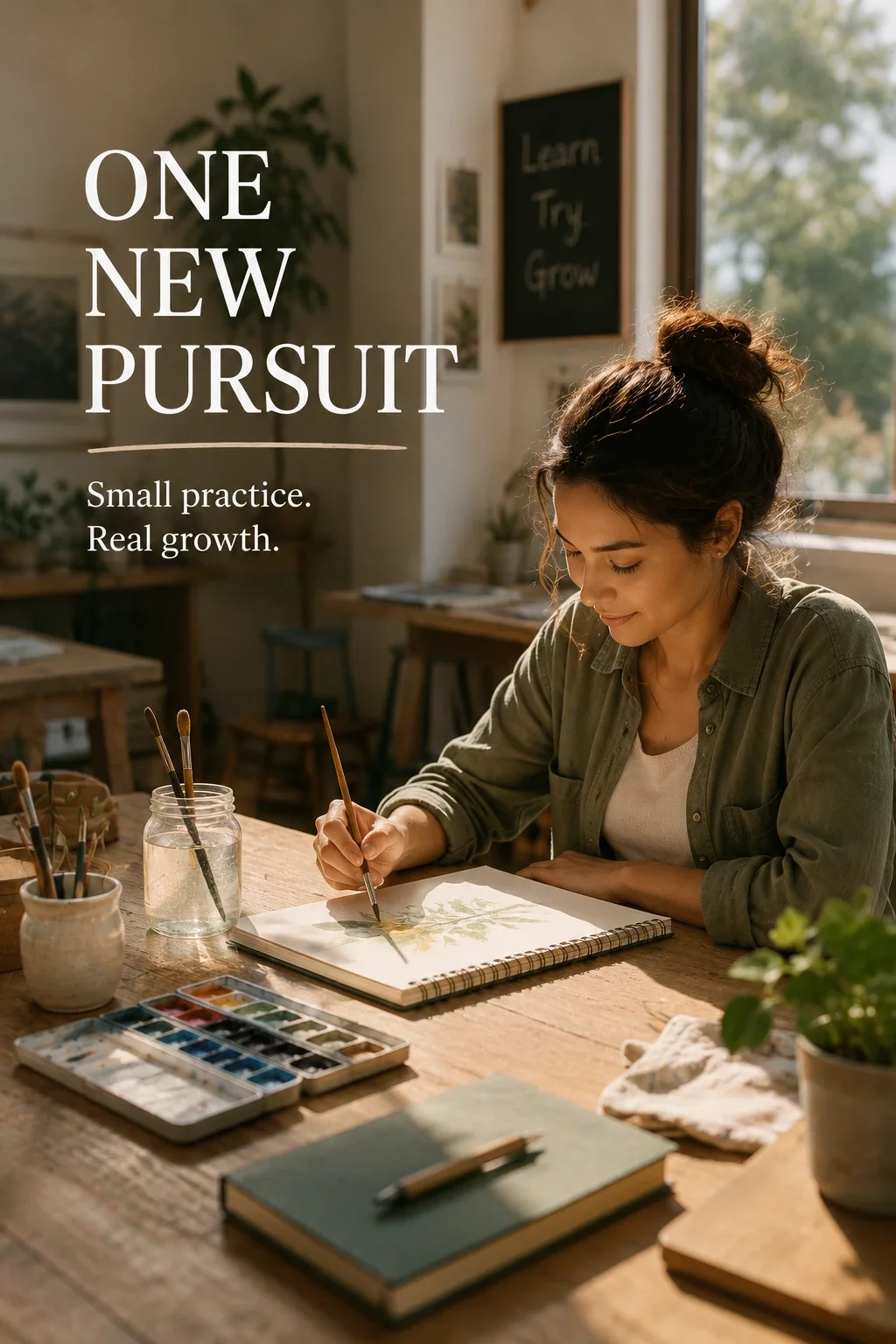
The truth is quieter, and far more hopeful: the best way to learn something new is to make learning small enough to repeat, and active enough to stick.
That’s the Start With One philosophy applied to growth:
Start With One skill. One short session. One tiny test. One honest rep.
Not to “become a new person,” but to build a life that keeps expanding.
This article gives you a practical, research-aligned system—plus answers to the common “People also ask” questions you see everywhere when you search learning methods.
The Best Way to Learn Something New (In One Sentence)
Use active learning, not passive consumption: practice, retrieve from memory, get feedback, and repeat in small, consistent blocks.
If you only watch, read, and highlight, you’ll feel productive—but you won’t build the “use it under pressure” skill that real learning requires.
Step 1: Get Clear on What You’re Learning and Why
Most learning fails at the starting line because the goal is fuzzy:
“Learn marketing”
“Get better at life.”
“Become smarter”
Better:
“Write 5 strong rental listings in 30 days.”
“Hold a 10-minute conversation in Spanish by June.”
“Cook 3 dinners confidently without a recipe.”
Clarity creates traction. It tells your brain what to filter for.
Start With One prompt:
“I’m learning _______ because it will help me _______.”
Step 2: Learn Actively—Test Yourself Early and Often
Active Recall (The Fastest Lever)
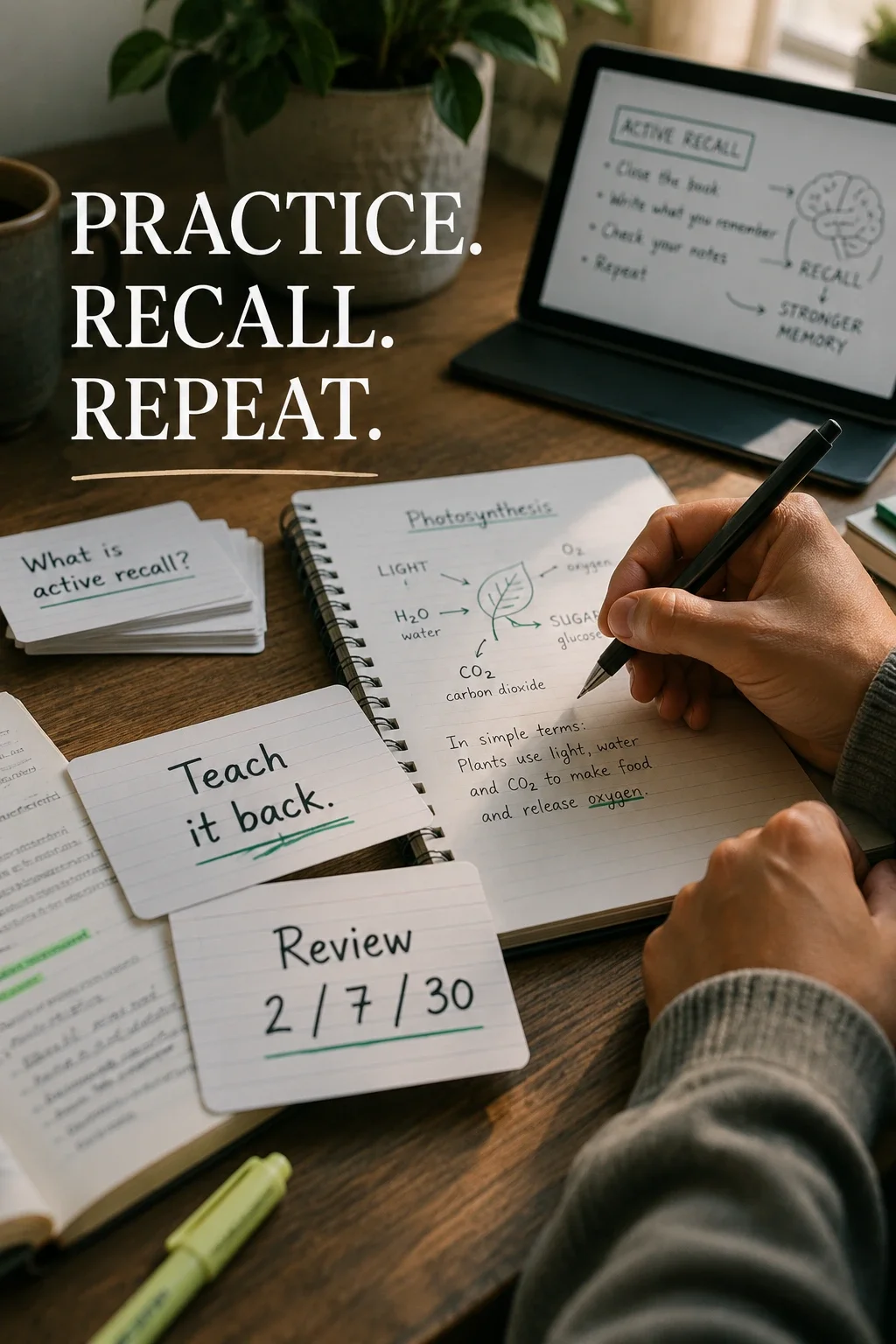
Active recall means closing the notes and pulling the idea out of your brain—because that “struggle” strengthens memory and understanding.
Try:
After a video or chapter, write down what you remember without looking.
Do 5 practice questions.
Explain the concept out loud from memory.
The Feynman Technique (Teach it Simply)
Pretend you’re teaching a 12-year-old. If you can’t explain it simply, you’ve found the gap.
Start With One move:
After each learning session, do a 60-second “teach back” from memory.
Step 3: Use Spacing so The Learning Stays (Instead of Evaporating)
Spaced Repetition
Cramming creates short-term familiarity. Spacing creates long-term retention.
A simple schedule that many people find helpful:
The 2–7–30 Rule
Review the material:
2 days after learning it
7 days after
30 days after
This fights the forgetting curve with minimal extra time.
Start With One move: Put “2 / 7 / 30” reminders in your calendar once you learn something important.
Step 4: Practice The 20% That Gives You 80% of Results
Skill-building gets easier when you deconstruct the skill and focus on the highest-leverage parts first (the “80/20” idea).
Examples:
Language: the top 300–500 words + core phrases
Cooking: knife skills + 10 staple meals
Writing: headlines + first paragraphs + editing
Fitness: consistency + form + progressive load
Start With One move: Ask: “What’s the smallest part of this skill that makes the biggest difference?”
Step 5: Make it Sustainable—Small Blocks Beat Big Bursts
A strong default is 30–50 minutes of focused learning with short breaks.
But the real secret is consistency over intensity: a little daily is better than an occasional heroic session.
Start With One schedule:
25 minutes, 4 days/week
or 10 minutes daily
or one weekly “long session” + two short refreshers
People Also Ask: quick, useful answers
What’s Another Word For Learning Something New?
Depending on the tone you want:
Upskilling (career-focused)
Skill-building
Self-development
Growth
Training
Acquiring (knowledge/skills)
Mastering (implies depth)
Exploring (low-pressure)
What is Learning Something New?
It’s the process of building new neural pathways through:
Exposure (input),
Practice (output),
Retrieval (memory),
Feedback (correction),
Repetition over time (retention).
What Are The 7 Learning Techniques?
A practical set you can actually use:
Active recall (self-testing)
Spaced repetition (review over time)
Interleaving (mix related sub-skills)
Deliberate practice (focus on weaknesses)
Teach-back (Feynman technique)
Feedback loops (coach/mentor/peer correction)
Chunking (break the skill into small components)
What is The 15–30–15 Method?
A simple 60-minute structure:
15 min review/flashcards/recall
30 min learning + practice (the main session)
15 min output (write/speak/build something)
It’s popular because it balances input, practice, and recall.
Start With One version: 5–10–5.
What is The 7–3–2–1 Study Method?
You’ll see different versions online. A useful, practical interpretation:
7 days: start a week out (avoid last-minute panic)
3 key topics: choose the highest-impact areas
2 active recall sessions: test yourself twice
1 final review: quick recap + rest
If you want, I can tailor this into a template for whatever you’re learning.
What’s The Easiest Way to Learn Something New?
The easiest way is the most repeatable way:
pick one small sub-skill,
practice in short-timed blocks,
test yourself from memory,
Repeat weekly.
How do I Professionally Say I Like Learning New Things?
A few strong options for LinkedIn/resume:
“I’m a continuous learner who enjoys quickly mastering new tools and skills.”
“I have a strong learning agility and adapt fast to new systems.”
“I’m proactive about upskilling and turning new knowledge into results.”
“I enjoy learning new methods and applying them in real-world projects.”
What New Skill is Most in Demand?
This changes fast, but broadly in 2025–2026, the most durable “meta-skill” is:
learning how to work with AI tools effectively (prompting, workflow automation, evaluation), alongside strong communication, data literacy, and project execution.
(If you want this nailed to a specific industry, real estate, rentals, or content, I can tailor a top 5.)
What Are The 7 Basic Life Skills?
A practical list:
Communication
Emotional regulation
Time management
Money basics
Problem-solving
Health habits (sleep/movement/nutrition)
Relationship skills (boundaries, empathy)
What Are 10 Life Lessons?
If you want them aligned with Start With One, they’d center on consistency, honesty, boundaries, attention, and small steps compounding.
Conclusion: The Real Win is Becoming The Kind of Person Who Keeps Learning
Learning something new isn’t about becoming impressive. It’s about becoming alive, mentally, creatively, emotionally.
So don’t start with a grand identity shift.
Start With One pursuit. One small session. One test. One repeatable routine.
That’s how “I wish I could” becomes “I’m the kind of person who can.”
📘 Get the book: Start With One: Small Steps to a Big Change → a.co/d/5uoSTEJ
🔗 The “One New Pursuit” Source Shelf — Credible Links Behind the Learning Blog
BetterUp — Learn something new (practical framework):
https://www.betterup.com/blog/learn-something-newHarvard Graduate School of Education — 5 ways to learn new things:
https://www.gse.harvard.edu/ideas/usable-knowledge/21/12/5-ways-learn-new-things-new-yearNPR — Tips for learning new skills (real-world approach):
https://www.npr.org/2021/10/30/1049098913/learning-new-skills-tipsVox — Retrieval practice & learning every day:
https://www.vox.com/even-better/23785695/learn-something-new-every-day-retrieval-practiceVerywell Mind — How to become a more effective learner:
https://www.verywellmind.com/how-to-become-a-more-effective-learner-2795162Study.gov.pl — Learn faster (brain + learning tips):
https://study.gov.pl/news/how-learn-faster-5-ways-tune-your-brain-new-thingsAlexander F. Young (blog) — Learning effectively / active recall tips:
https://blog.alexanderfyoung.com/how-to-learn-anything-lightning-fast-9-top-tips-to-learn-effectively/Reddit (community insights) — Most efficient way to learn (discussion):
https://www.reddit.com/r/productivity/comments/1mzossl/what_have_you_found_to_be_the_most_efficient_way/