Yoga for Beginners at Home
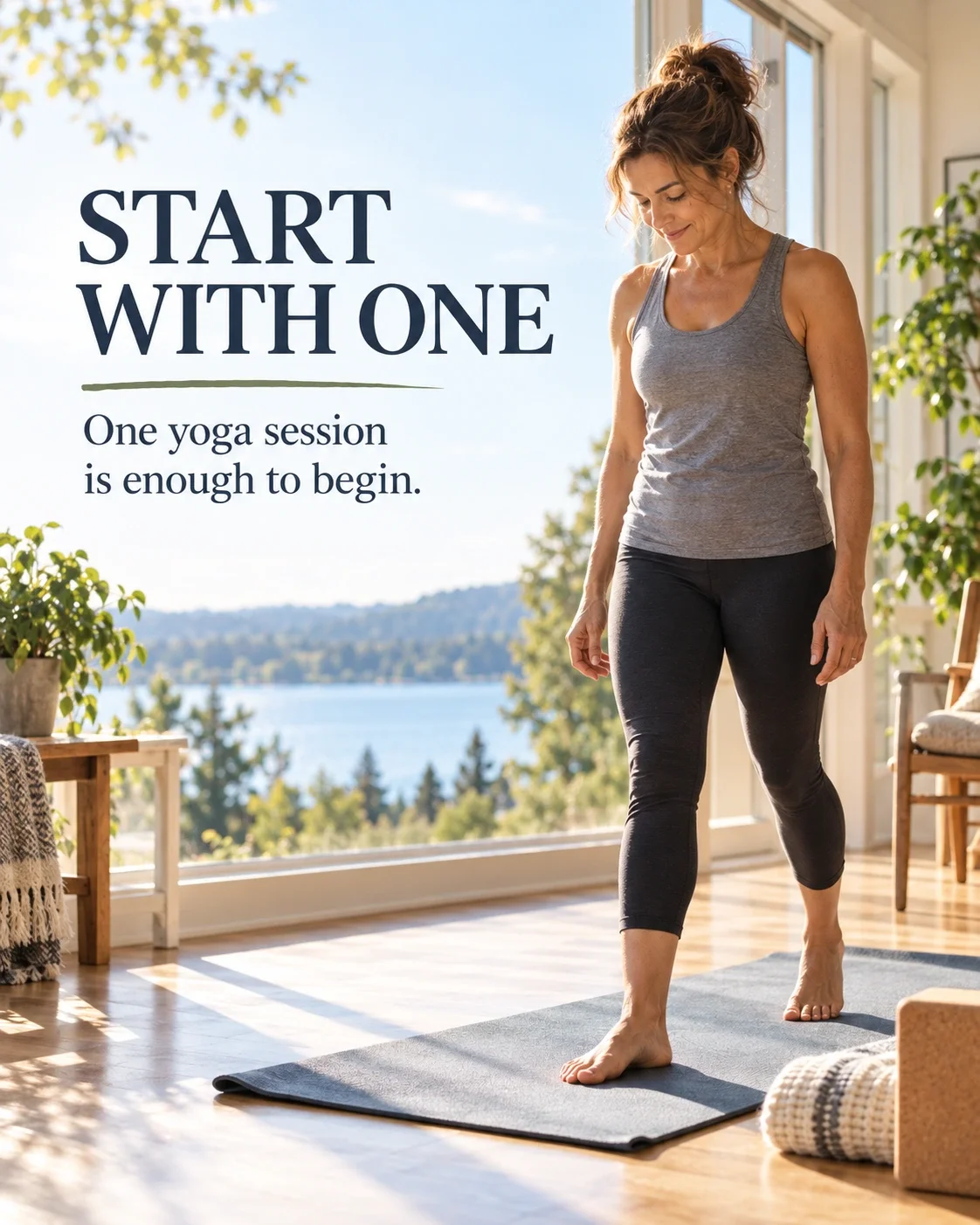
Yoga for Beginners at Home 2026
One Yoga Session: Nurturing Daily Balance
Beginning yoga at home does not require flexibility, expensive equipment, or an hour of free time.
You need a safe place to move, a few minutes, and a willingness to begin where your body is today.
That simplicity fits the Start With One philosophy. Meaningful change rarely begins with a dramatic overhaul. More often, it starts with one manageable action that becomes easier to repeat.
In Start With One, yoga is presented as more than stretching. A short session can become a moment to reconnect body, breath, and attention—a small pause that helps restore balance in the middle of an ordinary day.
Research also suggests yoga may support flexibility, balance, strength, stress management, sleep, and general well-being. It is not a cure-all, but it can be a practical part of a healthy lifestyle. (Google for Developers)
Start With One Session
Don't start by promising yourself yoga every day for the next year.
Begin with one session.
Ten or fifteen minutes is enough for a first practice. The goal is not to master yoga. It is to make the next session feel possible.
You do not need much:
A clear, non-slip space
Comfortable clothing
A yoga mat, carpet, or folded blanket
A sturdy chair or wall for support
Ten to fifteen uninterrupted minutes
The best home yoga routine is not the most impressive one. It is the one you are willing to repeat.
A Simple 15-Minute Beginner Yoga Routine
Start slowly and stay within a comfortable range of movement.
1. Breathing — 1 minute
Sit or stand comfortably. Relax your shoulders and take several easy breaths.
2. Mountain Pose — 1 minute
Stand tall with your feet comfortably apart. Feel both feet on the floor and relax your shoulders.
3. Cat-Cow — 2 minutes
On your hands and knees, gently alternate between arching and rounding your spine.
4. Child’s Pose — 2 minutes
Ease your hips toward your heels and fold forward. Use a cushion if needed.
5. Modified Downward-Facing Dog — 1 minute
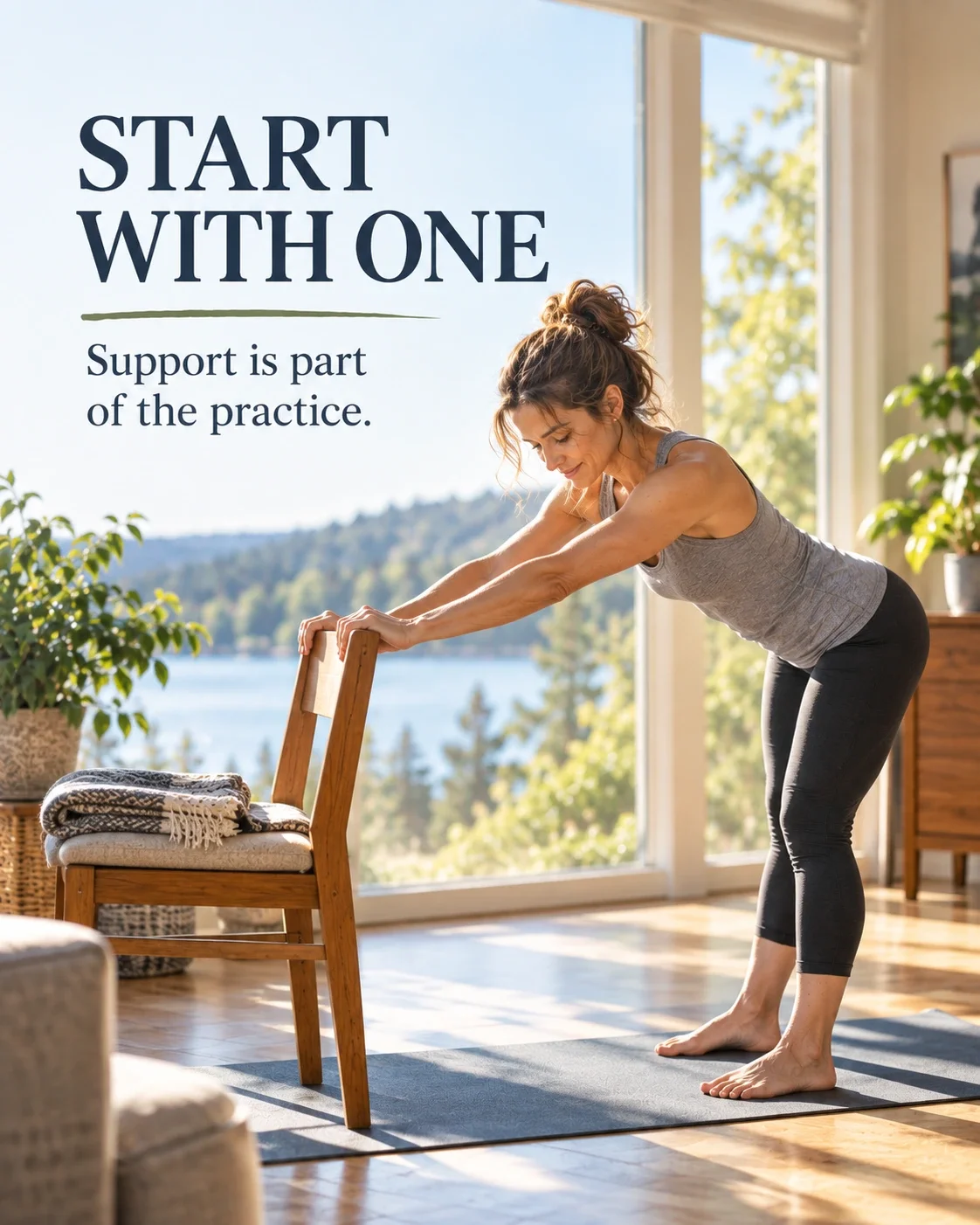
Lift your hips upward and back while keeping your knees bent. A wall or sturdy chair can make this easier.
6. Low Cobra — 1 minute
Lie on your stomach and gently lift your chest without forcing your lower back.
7. Warrior Pose — 2 minutes
Step one foot back into a comfortable stance. Bend the front knee slightly and breathe steadily. Switch sides.
8. Standing Forward Fold — 1 minute
Keep your knees soft and hinge forward. Your hands can rest on your thighs, shins, or a chair.
9. Final Rest — 3 minutes
Lie comfortably on your back and allow your breathing to settle.
The beginner framework above reflects the original material prepared for the article while keeping the emphasis on simple movements, modifications, and consistency.
Three Rules for Beginners
Follow your breath. If you are holding your breath or straining, reduce the intensity.
Do not push through sharp pain. Mild muscular effort is different from sharp joint pain, numbness, tingling, or dizziness.
Forget comparison. Bodies differ. A pose does not have to look identical to the instructor’s version to be useful.
For beginners, comfort and control matter more than depth.
Is 10 or 20 Minutes of Yoga Enough?
Yes, especially when you are beginning.
A short practice can improve mobility, balance, breathing awareness and consistency. Twenty minutes of yoga can become an excellent daily habit.
For overall fitness, yoga is best considered one part of a broader routine that can also include walking, cycling, swimming, or other aerobic activity and strength training.
The important principle is simple:
Consistency beats intensity.
A calm 15-minute session repeated several times is generally more useful than an exhausting workout you never want to repeat.
Can You Learn Yoga at Home?
Yes.
Beginner videos and online instruction can make yoga accessible, but learning some fundamentals from a qualified instructor can also help with alignment and modifications.
A good home practice should leave you feeling more aware of your body, not pressured to force it into a particular shape.
Is 50 Too Old to Start Yoga?
No.
People can begin yoga well beyond age 50. The appropriate style and difficulty simply depend on mobility, balance, previous injuries, and overall health.
Using a chair, wall, or other support is not “cheating.” It is intelligent adaptation.
Anyone with significant medical conditions, recent surgery, serious joint or back problems, balance difficulties, or other health concerns should seek professional guidance before beginning.
Can Yoga Help With Belly Fat?
Yoga can contribute to overall physical activity and weight management, but it cannot selectively remove fat from one area of the body.
Body composition is influenced by overall activity, nutrition, sleep, genetics, and health.
A better reason to begin yoga is what you may notice first: improved movement, better balance, greater body awareness, and a routine you can realistically maintain.
The Real Goal: Return to Balance
The most valuable lesson in yoga may not be flexibility.
It may be learning how to return.
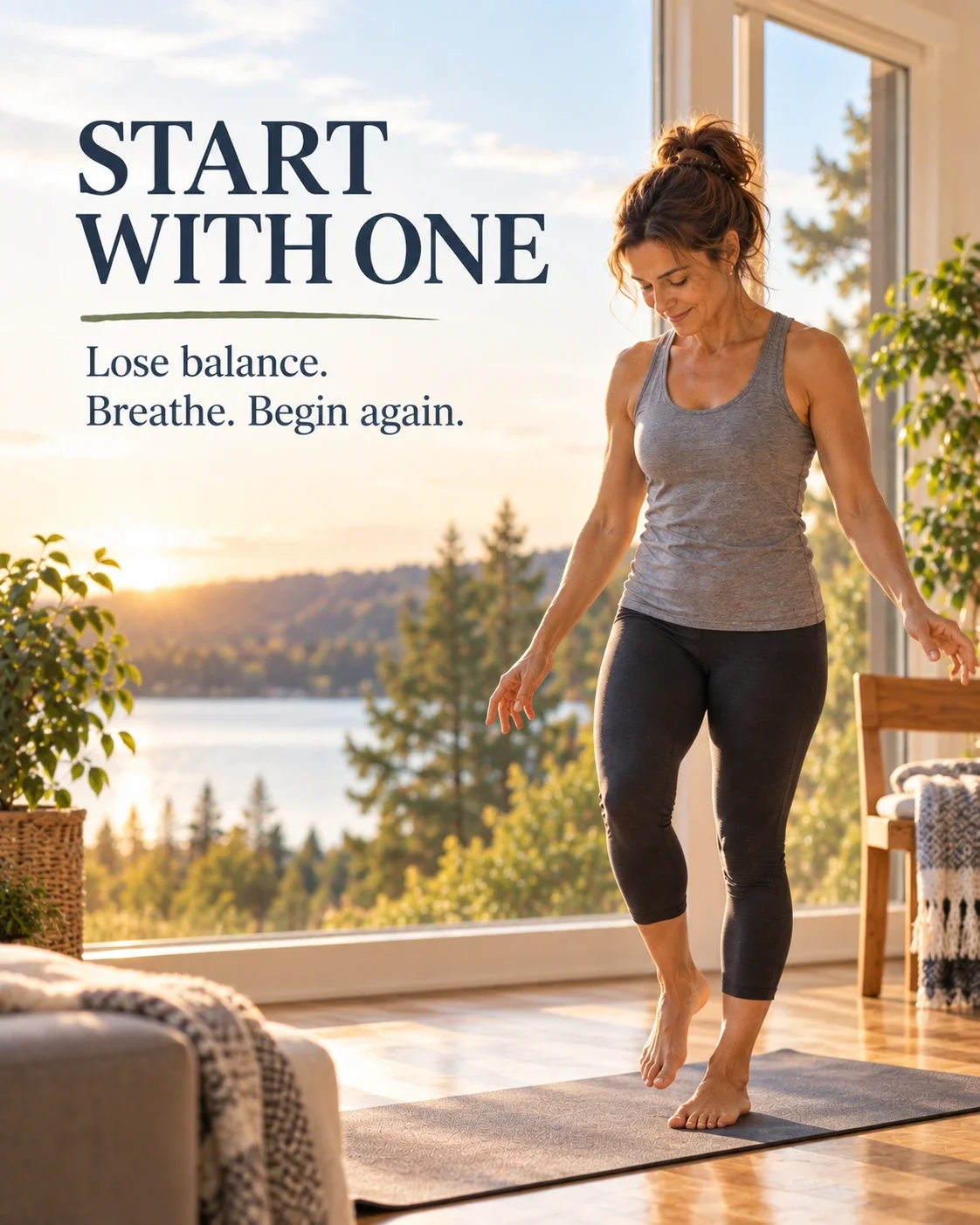
You lose your balance.
You notice.
You adjust.
You breathe.
And you begin again.
That is remarkably close to everyday life.
You do not need to know where a yoga practice will lead six months from now.
For today, the question is much smaller:
Can you do one session?
One breath.
One pose.
One session.
Then return tomorrow.
That is how small actions begin becoming something larger.
People Also Ask
How should a beginner start yoga?
Begin with a short 10–15 minute routine built around simple poses, comfortable breathing, and gradual progression.
Is 50 too old to start yoga?
No. Yoga can be adapted for different ages and mobility levels. Beginners should choose gentle movements and use support when needed.
Is 20 minutes of yoga a day enough?
Twenty minutes can be a meaningful daily practice, particularly for mobility, balance, relaxation and consistency.
Can I teach myself yoga at home?
Yes, especially with reputable beginner instruction. Occasional guidance from a qualified instructor can help with technique and modifications.
Is there a downside to yoga?
Yoga can cause strains or other injuries when poses are forced, or advanced movements are attempted too soon. Move gradually and stop when something causes sharp pain.
Can I lose belly fat by doing yoga?
Yoga can support overall activity and weight management, but it cannot target abdominal fat specifically.
📘 Get the book: Start With One: Small Steps to a Big Change → a.co/d/5uoSTEJ
🌿 Explore the Sources Behind “Yoga for Beginners at Home”
Here are the key source links referenced in the blog post and supporting research:
National Center for Complementary and Integrative Health — Yoga: Effectiveness and Safety
https://www.nccih.nih.gov/health/yoga-effectiveness-and-safetyCenters for Disease Control and Prevention — Physical Activity Guidelines
https://www.cdc.gov/physical-activity-basics/guidelines/index.htmlCenters for Disease Control and Prevention — Physical Activity and Healthy Weight
https://www.cdc.gov/healthy-weight-growth/physical-activity/index.htmlJohns Hopkins Medicine — 9 Benefits of Yoga
https://www.hopkinsmedicine.org/health/wellness-and-prevention/9-benefits-of-yogaAsana Rebel — Yoga for Beginners at Home
https://asanarebel.com/en/yoga-for-beginners-at-home/The Yoga Sensei — Yoga for Beginners
https://www.theyogasensei.com/guides/yoga-for-beginnersMyYogaTeacher — Yoga for Beginners at Home
https://myyogateacher.com/articles/yoga-for-beginners-at-homeTODAY — Yoga for Beginners
https://www.today.com/health/diet-fitness/yoga-for-beginners-rcna11590Good Housekeeping — Yoga for Beginners
https://www.goodhousekeeping.com/health/fitness/a42396941/yoga-for-beginners/8fit — 20-Minute Yoga for Beginners at Home
https://8fit.com/fitness/20-minute-yoga-for-beginners-at-home-routine/Peloton — Yoga Exercises for Beginners
https://www.onepeloton.com/blog/yoga-exercises-for-beginners