How Do I Cut Back Social Media?

How Do I Cut Back Social Media?
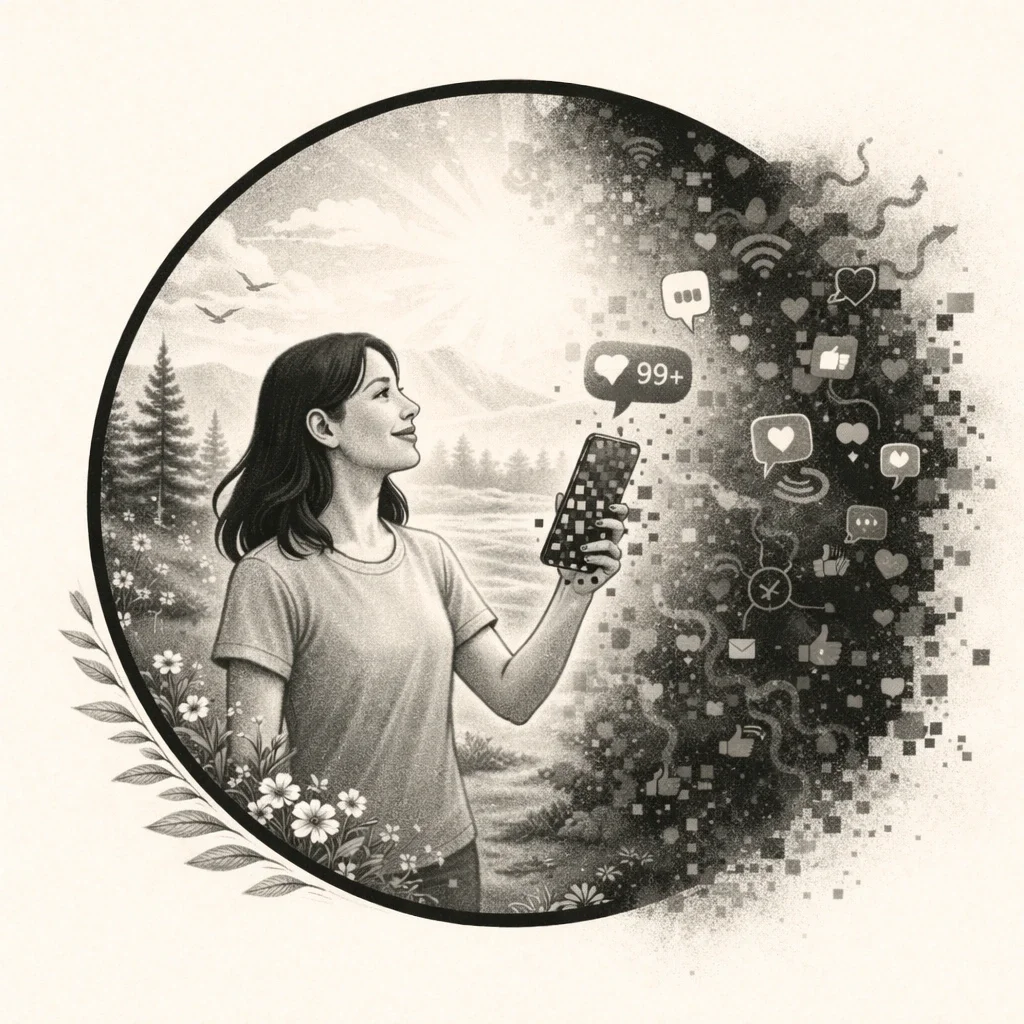
One Less Social App: Reclaiming Your Life from the Digital Abyss
You don’t have a “discipline problem.” You have an attention economy problem.
In 2026, social media isn’t simply a place where people post photos and updates; it’s a set of highly optimized systems built to keep you engaged. For many people, that constant pull shows up at the worst possible times: late-night scrolling that wrecks sleep before a work shift, “just checking” that becomes an hour of comparison and anxiety, or a quick break that quietly derails an evening you needed for rest, budgeting, or real connection at home.
This isn’t about quitting the internet or turning into a digital monk. It’s about regaining your time, focus, and mood, without sacrificing the benefits that social media can genuinely provide when used intentionally.
Below is a renter-friendly, research-informed guide that answers four of the most common questions people ask and provides a plan you can start today.
How many hours of social media use is considered an addiction?
There isn’t a single hour-count that automatically equals “addiction.” Clinicians look at loss of control and impact more than time alone, specifically:
You keep using it longer than you intend, most days
You’ve tried to cut back and can’t
You feel restless, anxious, or low when you can’t check
Your use harms sleep, work, relationships, finances, or mental health
That said, research does offer useful ranges:
3+ hours/day is often labeled “excessive” in studies and is associated with significantly higher anxiety and depression symptoms, especially when the use becomes compulsive.
Many teens average 4–5 hours/day on social apps alone, which helps explain why this conversation has intensified in recent years.
Estimates suggest a smaller subset of users meet criteria consistent with addiction-like patterns (withdrawal, failed cutbacks, continued use despite harm), but the borderline zone is much larger: lots of people aren’t “addicted,” yet still feel stuck.
A practical, realistic benchmark:
If social media regularly displaces sleep, responsibilities, or real-life relationships, you don’t need a diagnosis to justify change. Your life is giving you the data.
What is the main cause of social media addiction?
It’s not one cause—it’s a combination of design + brain chemistry + vulnerability + timing.
1) Reward loops that behave like a slot machine
Endless feeds, likes, comments, and notifications create a repeating “desire → reward → desire” cycle. Your brain starts craving the next hit, especially when the reward is unpredictable.
2) Algorithmic personalization that learns your triggers
Modern platforms track what you pause on, react to, argue with, or return to late at night, and then serve more of it. Over time, it can feel less like you’re choosing content and more like content is choosing you.
3) Fear of missing out (FoMO) and comparison
When you’re constantly exposed to highlight reels, your brain starts treating “not knowing” as a threat. That pulls you back to check—then check again.
4) Stress-coping (the quiet driver people underestimate)
Many people scroll to numb stress, loneliness, uncertainty, or boredom. But heavy use can worsen mood and stress patterns over time, meaning the coping tool becomes part of the problem.

How do I cut back on social media?
Cutting back works best when you stop treating it like a willpower contest and start treating it like a systems change.
Step 1: Turn off the “digital leash” (notifications)
Immediately disable all non-essential notifications—likes, follows, suggestions, “memories,” trending alerts.
Goal: You choose when to check. Your phone doesn’t decide for you.
Step 2: Delete apps from your phone (desktop-only access)
If you want a fast reduction, this is one of the most effective moves:
Delete the app from your phone
Use it only on a desktop (or a device you don’t carry everywhere)
Why it works: You add friction. Friction breaks habits.
Step 3: Set strict daily time limits (with lockout windows)
Use Screen Time/Digital Wellbeing to set:
A realistic daily cap (especially if you’re at 4–5 hours/day)
A night lockout (60–90 minutes before bed)
A morning lockout (first 60–90 minutes of the day)
Step 4: Create no-scroll zones in your home
Even in a studio, you can create boundaries:
Bed is for sleep (and intimacy, if applicable), not doomscrolling
Table is for food, not feeds
Bathroom stays phone-free (yes, this one matters more than people admit)
Step 5: Replace scrolling with something that restores you
The brain hates a vacuum. Don’t just remove the habit, replace the reward.
Fast friendly replacements:
8-minute walk (or stairs)
10 pages of a book
Stretching while listening to music
Texting one friend directly (real connection beats passive browsing)
Tidying one surface (countertops are emotional real estate)
Step 6: Try a “Digital Sabbath” (one day off a week)
Pick one day (or half-day) each week with no feeds:
Messaging/calls allowed for real-life coordination
No scrolling, no short-form video, no “just checking.”
What people notice quickly: better sleep, less anxiety, more time for chores, meal prep, budgeting, and actually enjoying where you live.
How harmful is social media addiction?
Harm depends on time + compulsiveness + age + what it replaces.
When use becomes compulsive and hard to control, research links it to:
Higher anxiety and depression symptoms
Sleep disruption, especially from late-night scrolling
Worse focus and productivity, making sustained attention harder
Lower life satisfaction, as online time displaces real-world fulfillment
Body image and eating-risk issues, especially in teens and young adults
The most overlooked harm is the quiet one: life shrinkage.
When your default coping strategy is scrolling, you lose small opportunities to build a life that actually feels good, relationships, hobbies, movement, rest, creativity, and presence.
The balanced truth:
Used intentionally and in moderation, social media can support connection and creativity. The problem isn’t “social media exists.” The problem is when it turns into the place you live.

The “One Less Social App” reset: a simple plan you can start today
You don’t need a massive reinvention. You need one strong first move.
Today (15 minutes)
Turn off all non, essential social notifications
Move social apps off your home screen (or delete one)
Set a bedtime “no-phone” window (60–90 minutes)
This week
Check your actual daily screen time (most people underestimate by 1–2 hours)
Set a realistic cap (reduce gradually, not instantly)
Establish two no-scroll zones: bed + table
This month
Track sleep, mood, and focus as you reduce hours
Add one offline hobby that genuinely rewards you
Choose your “One Less Social App” for 30 days (delete it, desktop-only, or restricted hours)
Closing: Social media isn’t evil—but your attention is priceless
If you’re reading this because your thumb keeps moving and your life feels smaller than it should, here’s the encouraging part: this is one of the most reversible problems in modern life.
You don’t have to quit everything. You just have to reclaim the controls.
Start with one:
One less app. One less hour. One more boundary. One more real-life habit that makes you feel like yourself again.
📘 Get the book: Start With One: Small Steps to a Big Change → a.co/d/5uoSTEJ
🔗 “Start With One” Research Link List (The Sources Behind the Story)
Social media addiction & mental health outcomes (2026 research):
https://pmc.ncbi.nlm.nih.gov/articles/PMC12165459/Clinical lens on “addiction” (loss of control > hours):
https://pmc.ncbi.nlm.nih.gov/articles/PMC11594359/Teen social media use (4–5 hours/day) + mental health context (APA):
https://www.apa.org/monitor/2024/04/teen-social-use-mental-healthWorldwide addiction estimates + usage patterns (survey roundup):
https://www.mastermindbehavior.com/post/social-media-addiction-statistics-worldwideWarning signs + mental health guidance (HelpGuide):
https://www.helpguide.org/mental-health/wellbeing/social-media-and-mental-healthMechanisms: reward loops + personalization (review research):
https://pmc.ncbi.nlm.nih.gov/articles/PMC11804976/FoMO + mental health + safer use tips (UC Davis Health):
https://health.ucdavis.edu/blog/cultivating-health/social-medias-impact-our-mental-health-and-tips-to-use-it-safely/2024/05Stanford insight on addictive design + notifications:
https://med.stanford.edu/news/insights/2021/10/addictive-potential-of-social-media-explained.htmlFoMO explainer (UT Dallas neuroscience blog):
https://neblog.utdallas.edu/2025/08/14/the-fear-of-missing-out-fomo-how-social-media-hijacks-our-minds/Screen-time underestimation + usage stats (Grove Treatment overview):
https://grovetreatment.com/addiction/statistics/social-media/