How to Be Grateful in Hard Times 2026

How to Be Grateful in Hard Times 2026
One More Thank You: The Power of Gratitude in Enriching Lives
Gratitude in hard times does not mean pretending life is easy. It means making room for two truths at once: this hurts, and something is still helping me endure. The smallest thank you—a warm drink, a steady friend, a safe room, one breath, one more day—can become a point of light when life feels heavy.
There are seasons when gratitude feels almost impossible.
A diagnosis.
A job loss.
A broken relationship.
A financial strain.
A grief that changes every ordinary day.
In those moments, being told to “just be grateful” can feel dismissive. It can sound like someone is asking you to decorate pain instead of understand it.
But real gratitude is not denial.
It is not forced happiness.
It is not ignoring injustice, loss, or exhaustion.
It is not pretending everything happens for a reason.
Real gratitude is steadier than that.
It is the practice of noticing what remains supportive, meaningful, kind, or beautiful, even while acknowledging what hurts.
The Start With One idea is simple:
Do not try to become grateful for your entire life all at once.
Start with one more thank you.
One object.
One person.
One small relief.
One ordinary mercy.
One sentence of appreciation.
That is enough to begin.
Gratitude Is Not the Opposite of Pain
One of the biggest misunderstandings about gratitude is that it must replace sadness.
It does not.
Gratitude and grief can exist together.
You can be heartbroken and grateful someone brought food.
You can be afraid and grateful the doctor listened.
You can be exhausted and grateful your child laughed.
You can be uncertain and grateful the morning still arrived.
This is not a contradiction.
It is being human.
Hard times are layered. A single day can hold fear, tenderness, anger, relief, loneliness, beauty, and love.
Gratitude does not erase the painful layer.
It widens the frame.
A healthier sentence sounds like this:
“This is hard, and I am grateful for one thing helping me through it.”
That word matters.
It allows truth to breathe.
Why Do I Struggle to Be Grateful?
You may struggle to be grateful because your mind is trying to protect you.
When life feels threatening, your attention naturally moves toward danger. You notice what is wrong, what could go wrong, who might leave, what might fail, and what needs fixing.
That is not weakness.
It is survival.
But over time, stress can narrow your world.
You begin to see only the problem.
Only the debt.
Only the diagnosis.
Only the rejection.
Only the uncertainty.
Gratitude gently challenges that narrowing.
It does not say, “There is no danger.”
It says, “There is also support.”
That distinction is important.
Gratitude is not a blindfold.
It is a window.
What Causes a Lack of Gratitude?
A lack of gratitude is often caused by pain, stress, comparison, burnout, grief, resentment, fear, or feeling unseen.
Sometimes people are not ungrateful.
They are overwhelmed.
When someone is exhausted, their brain may not easily notice beauty, kindness, or support. When someone feels hurt, gratitude may feel unsafe or fake. When someone has been disappointed repeatedly, appreciation may feel like lowering their guard.
That is why gratitude should never be forced.
It should be invited.
Start with something small enough to feel true.
Not:
“I am grateful for everything.”
Try:
“I am grateful this blanket is warm.”
“I am grateful one person checked on me.”
“I am grateful I made it through today.”
“I am grateful the water is running.”
Small gratitude is not small in impact.
It is specific, believable, and close enough to touch.
What Are 5 Ways to Show Gratitude?
Gratitude becomes stronger when it moves from thought into action.
Here are five simple ways to show gratitude during hard times.
1. Say One Specific Thank You
Instead of saying, “Thanks for everything,” say:
“Thank you for checking on me yesterday. It made me feel less alone.”
Specific gratitude feels more human.
2. Send One Message
Text someone who helped you.
“I know I have been quiet lately, but I want you to know I appreciate you.”
One sentence can become a bridge.
3. Notice One Small Comfort
Pause for ten seconds with something supportive:
A warm cup.
A soft blanket.
A quiet room.
A deep breath.
A safe place to sit.
Let the body register the comfort.
4. Write One Line
At the end of the day, write:
“One thing helping me today is…”
Keep it honest. Keep it small.
5. Do One Kind Thing
Gratitude can become movement.
Hold a door.
Send encouragement.
Bring coffee.
Check on someone.
Listen without rushing.
Sometimes gratitude grows when we give it away.
What Is the Golden Rule of Gratitude?
The golden rule of gratitude is this:
Do not use gratitude to deny pain. Use it to steady yourself inside pain.
Toxic positivity says:
“Do not be sad. Be grateful.”
Real gratitude says:
“You can be sad and still notice what supports you.”
Toxic positivity says:
“Other people have it worse.”
Real gratitude says:
“Your pain matters, and support still exists.”
Toxic positivity says:
“Everything happens for a reason.”
Real gratitude says:
“Even when I do not understand this, I can look for one source of strength.”
You do not have to be grateful for abuse, injustice, betrayal, illness, loss, or trauma.
You may, over time, become grateful for your resilience, your support system, your recovery, or the wisdom you gained.
But that is different from being grateful for the wound itself.
Gratitude should steady you.
It should not shame you.
What Are the Four A’s of Gratitude?
A simple way to practise gratitude is through the Four A’s:
1. Awareness
Notice what is still helping you.
Ask:
What is holding me up today, even 1%?
2. Acknowledgment
Name it honestly.
This person helped me.
This moment gave me relief.
This small thing mattered.
3. Appreciation
Let yourself feel the value of it.
Do not rush past the good thing. Pause long enough to receive it.
4. Action
Express it.
Say thank you. Write the message. Return the kindness. Let gratitude become visible.
The Four A’s move gratitude from an idea into a practice:
Awareness.
Acknowledgment.
Appreciation.
Action.
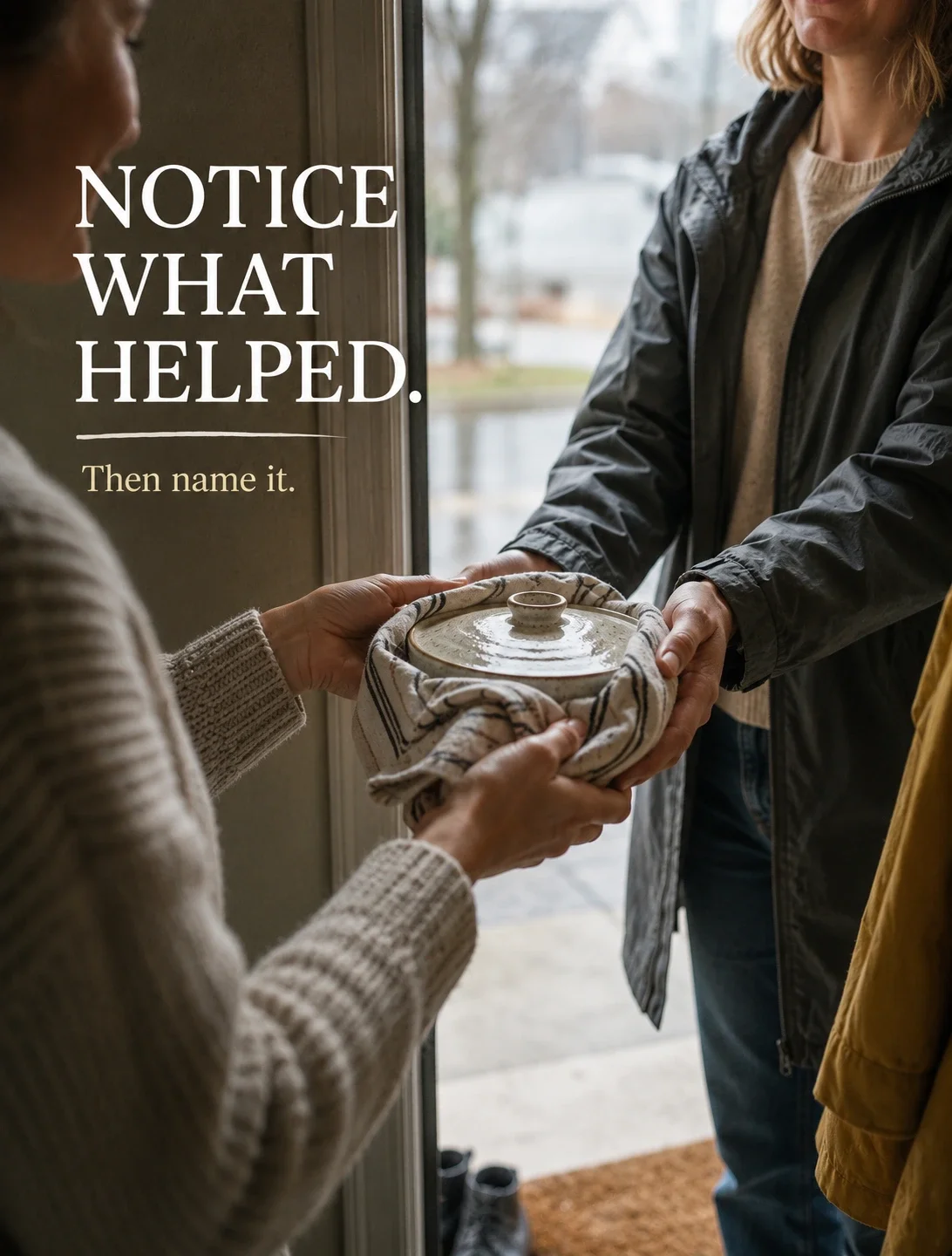
The “Hard and Helpful” Practice
When gratitude feels fake, use this sentence:
“I am having a hard time with ______, and I am grateful for ______.”
Examples:
I am having a hard time with money, and I am grateful I have one person I can be honest with.
I am having a hard time with grief, and I am grateful for the memories that still feel close.
I am having a hard time with my health, and I am grateful for the appointment that gave me more information.
I am having a hard time with loneliness, and I am grateful I took one step outside today.
This structure protects honesty.
It does not ask pain to leave before gratitude can enter.
It lets both be true.
A Two-Minute Gratitude Routine for Hard Times
When life is overwhelming, the best routine is short, honest, and repeatable.
At the end of the day, write three lines.
1. OOne Hard Thing
Today was hard because…
This gives your pain a place to be acknowledged.
2. One Thing That Helped
One thing that helped was…
This trains your attention to notice support.
3. One Thing I Appreciate About Myself
One thing I appreciate about myself today is…
Examples:
I kept going.
I asked for help.
I rested instead of pushing past my limit.
I told the truth.
I survived the day.
In hard times, self-recognition is not arrogance.
It is repair.
What Is a Powerful Gratitude Message?
A powerful gratitude message is specific, sincere, and personal.
Try this:
“I want you to know that what you did mattered to me. I was going through a difficult time, and your kindness helped me feel less alone. Thank you for showing up in a way I will not forget.”
Or make it shorter:
“Thank you for being there when life felt heavy. Your support meant more than I knew how to say at the time.”
The best gratitude message does not need to be poetic.
It needs to be true.
A Start With One Gratitude Plan
Try this for seven days.
Day 1: One Object
Name one physical object near you that brings comfort.
Day 2: One Person
Send one thank-you message to someone who helped you.
Day 3: One Small Relief
Notice one thing that made the day 1% easier.
Day 4: One Past Strength
Remember one hard season you survived and name the strength it required.
Day 5: One Functional Blessing
Write down one basic thing that worked today: water, heat, shelter, food, transportation, technology, or rest.
Day 6: One Self-Thank You
Thank yourself for one thing you did to keep going.
Day 7: One More Thank You
Say one thank you out loud, to another person, to life, to your body, to God, to the day, or simply to the part of you that did not quit.
Do not measure the practice by whether your life instantly feels better.
Measure it by whether your attention becomes a little less trapped.
That is the beginning.
Frequently Asked Questions
How can I be grateful when life is hard?
Start by acknowledging that life is hard. Then look for one small, specific thing that is helping you endure. Gratitude should not deny pain. It should help you notice support.
What are 5 ways to show gratitude?
Say a specific thank you, send an appreciative message, notice a small comfort, write one gratitude line, or do one kind action for someone else.
Why do I struggle to be grateful?
You may be stressed, grieving, burned out, hurt, overwhelmed, or focused on survival. Start with gratitude that feels small and true.
What is the golden rule of gratitude?
Do not use gratitude to deny pain. Use it to steady yourself inside pain.
What are the four A’s of gratitude?
The four A’s are awareness, acknowledgment, appreciation, and action.
What causes a lack of gratitude?
A lack of gratitude can come from stress, comparison, resentment, grief, fear, exhaustion, or feeling unsupported.
What is a powerful gratitude message?
A powerful gratitude message names what the person did, explains why it mattered, and expresses sincere appreciation.
One More Thank You
Hard times can shrink the world.
They can make life feel like a hallway with no windows.
Gratitude does not remove the hallway.
But it may help you notice the light under the door.
A kind word.
A steady hand.
A meal.
A memory.
A breath.
A person who stayed.
A strength you forgot you had.
The thank you does not have to be big.
It only has to be true.
Start with one.
One object.
One person.
One ordinary mercy.
One small relief.
One sentence in a journal.
One message sent.
One moment of beauty that hardship did not manage to steal.
Start With One more thank you. Gratitude does not deny the hard road; it gives you one light to carry while you walk it.
📘 Get the book: Start With One: Small Steps to a Big Change → a.co/d/5uoSTEJ
One Light to Carry: Sources Behind “How to Be Grateful in Hard Times”
Harvard Health Publishing — Giving Thanks Can Make You Happier
https://www.health.harvard.edu/healthbeat/giving-thanks-can-make-you-happierGreater Good Science Center — Expanding Gratitude
https://ggsc.berkeley.edu/what_we_do/major_initiatives/expanding_gratitudeNational Library of Medicine / PMC — Gratitude Interventions: A Systematic Review and Meta-Analysis
https://pmc.ncbi.nlm.nih.gov/articles/PMC10393216/HelpGuide — Gratitude: The Benefits and How to Practice It
https://www.helpguide.org/mental-health/wellbeing/gratitudeCalm — Things to Be Grateful For
https://www.calm.com/blog/things-to-be-grateful-forPsychology Today — Creating Gratitude in Difficult Times
https://www.psychologytoday.com/us/blog/the-art-of-grieving/202411/creating-gratitude-in-difficult-timesGrateful Living — Gratitude Practice Resources
https://grateful.org/Tiny Buddha — Appreciating Hard Times and Cultivating Gratitude
https://tinybuddha.com/blog/4-reasons-to-appreciate-hard-times-and-how-to-cultivate-gratitude/Live Well with Sharon Martin — Gratitude During Difficult Times
https://www.livewellwithsharonmartin.com/gratitude-during-difficult-times/Start With One — Source Book Inspiration
Start With One: Small Steps to a Big Change
Relevant theme: “One More Thank You: The Power of Gratitude in Enriching Lives”