How to Start Working Out
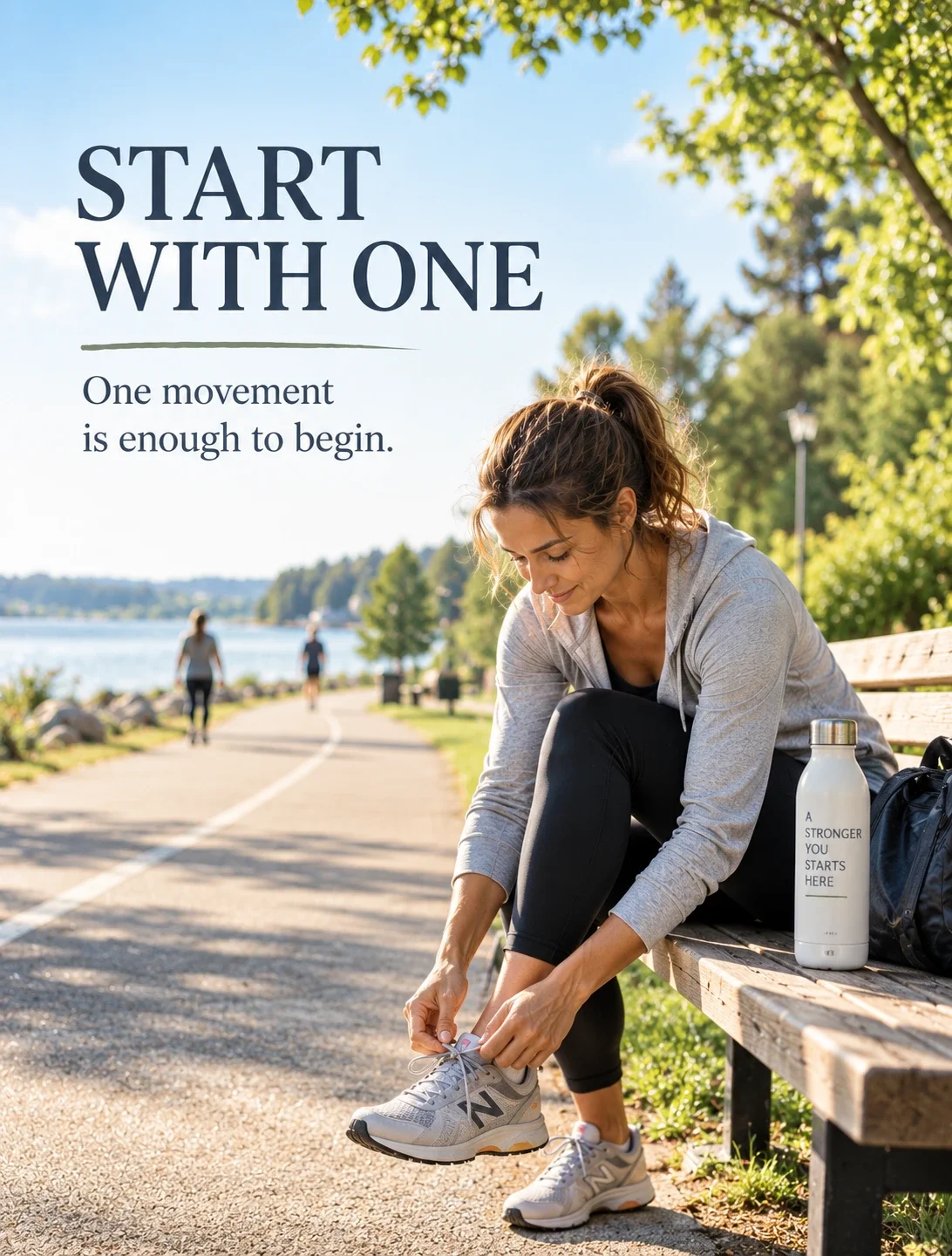
How to Start Working Out
One Push-Up, One Sit-Up, One Squat: The Path to Lifelong Fitness
The best way to start working out as a beginner is to start smaller than your ambition. Begin with movement you can repeat: walking, one short strength session, and basic bodyweight exercises such as one push-up, one sit-up, and one squat. Your first goal is not exhaustion. Your first goal is becoming someone who moves consistently.
Most people do not fail at fitness because they lack desire.
They fail because they start with a plan designed for a different life.
A six-day gym schedule.
A punishing routine.
A strict diet.
A social media workout split.
A promise to become a completely different person by Monday.
For a few days, the intensity feels like progress.
Then soreness arrives. Life interrupts. Motivation fades. The old story returns: I guess I am not a fitness person.
But the story is often wrong.
You may not need more discipline.
You may need a smaller door.
The Start With One approach is simple:
One push-up.
One sit-up.
One squat.
One walk.
One promise kept.
That is how lifelong fitness begins.
How Should a Beginner Start Working Out?
A beginner should start with a simple weekly structure:
Walk regularly, strength train twice per week, and recover enough to repeat it.
A good first-month goal is:
“I will complete three 20-minute workouts or walks each week for four weeks.”
This is specific, realistic, and repeatable.
Your first workouts can be small:
A 10-minute walk
One round of bodyweight exercises
Two short strength sessions per week
Stretching before bed
Standing up every hour
One push-up, one sit-up, one squat
The beginner mistake is trying to start at the destination.
A better approach is to build the road.
Why Is It So Hard to Start Working Out?
Starting is hard because exercise is not only physical.
It is emotional.
It can bring up embarrassment, past failure, body shame, fear of judgment, impatience, confusion, or the belief that if you cannot do it perfectly, you should not do it at all.
It is also logistical.
You need time, clothing, energy, a plan, confidence, transportation, childcare, and mental space.
That is why “just go to the gym” is not always helpful advice.
The better question is:
How do I make the first step so small that resistance has less power?
A habit that starts gently can become strong enough to last.
How Do Beginners Start the Gym?
Beginners start the gym by going in with a simple plan.
Your first gym goal is not to use every machine.
Your first goal is to become familiar with the space.
Walk in.
Warm up.
Do a short full-body routine.
Leave with energy still in the tank.
A Beginner Gym Routine
Try this two days per week.
1. Warm Up: 5 Minutes
Walk on a treadmill, use a bike, or move gently on an elliptical.
2. Leg Press or Chair Squat: 8–12 Reps
Train the basic movement of sitting and standing.
3. Chest Press or Incline Push-Up: 8–12 Reps
Use a machine, wall, bench, or countertop.
4. Seated Row or Band Row: 8–12 Reps
Balance pushing with pulling.
5. Glute Bridge or Hip Hinge: 10–15 Reps
Build strength through the hips and back of the body.
6. Plank or Dead Bug: 15–30 Seconds
Train the core without complicated ab exercises.
7. Cool Down: 3–5 Minutes
Walk slowly and let your breathing settle.
Do one or two rounds.
That is enough.
You do not need to leave destroyed.
You need to leave willing to come back.
How to Start Exercise for the First Time
The first time you start exercising, make it almost impossible to fail.
Use this rule:
Your first workout should feel too easy.
The first session is not about proving toughness.
It is about proving you can begin.
Try this at home:
The Start With One First Workout
Do:
1 wall push-up
1 sit-up or crunch
1 squat to a chair
1 minute of walking
1 glass of water
Then stop.
You can do more if you want, but you do not have to.
This tiny workout breaks the seal.
It turns fitness from an idea into an action.
The next day, do two of each.
Then three.
Or stay at one until the habit feels natural.
Small actions repeated over time become a training ground for bigger change.
Is It Good to Exercise as Soon as I Wake Up?
It can be good to exercise after waking up if it fits your body, schedule, and energy.
Morning workouts can reduce decision fatigue because the day has not had time to interrupt you yet. For some people, exercising early creates momentum.
But morning is not magic.
The best workout time is the time you can repeat.
If you wake up stiff, tired, or rushed, start gently:
Drink water
Move slowly
Warm up longer
Begin with walking or mobility
Avoid intense training before your body feels ready
A simple morning beginner routine could be:
1 minute of breathing
5 minutes of walking
5 bodyweight squats
5 wall push-ups
5 gentle stretches
That is not a small morning.
That is a vote for the person you are becoming.
What Not to Do Before Going to the Gym
The gym is easier when you avoid common beginner mistakes.
Do Not Arrive Without a Plan
Know your first three exercises before you arrive.
Do Not Skip the Warm-Up
Start with five minutes of easy movement.
Do Not Train Through Sharp Pain
Muscle effort is normal. Sharp, sudden, or unusual pain is a signal to stop.
Do Not Copy Advanced Routines
Their program was not built for your starting point.
Do Not Go Too Hard Too Soon
The workout that ruins your next week is not a good beginner workout.
Do Not Underfuel Dramatically
Your body needs energy to move, build strength, and recover.
Do Not Judge Progress Only by the Mirror
Progress includes better energy, improved mood, stronger movement, better sleep, confidence, and consistency.
Fitness is not only what changes on your body.
It is what changes in your relationship with your body.
The Beginner Fitness Formula
A sustainable beginner plan includes four parts.
1. Cardio
Walking, biking, swimming, dancing, hiking, rowing, or sports.
Start with 10 to 30 minutes.
2. Strength
Squats, push-ups, rows, lunges, hip hinges, carries, and core work.
Start with two days per week.
3. Mobility
Gentle stretching, joint circles, yoga, or controlled movement.
Start with five minutes.
4. Recovery
Sleep, rest days, hydration, nutrition, and lighter movement.
Recovery is not laziness.
It is where adaptation happens.
A balanced routine should not punish the body.
It should teach the body that movement is safe, useful, and repeatable.
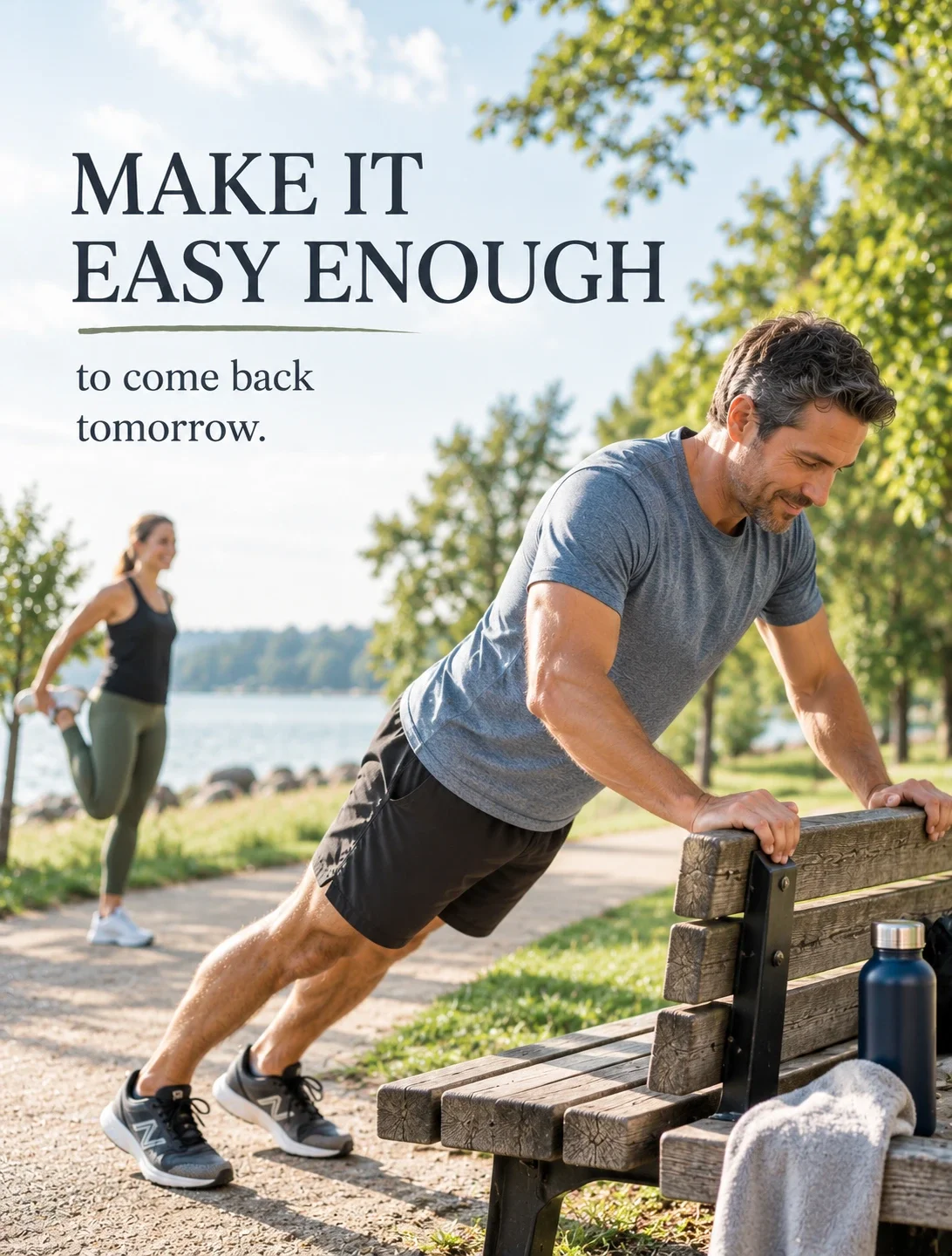
A Simple Four-Week Beginner Workout Plan
Weeks 1–2: Build the Habit
Do three sessions per week.
Session A: Walk
Walk 10 to 30 minutes at a pace where you can talk but not easily sing.
Session B: Strength
Do one or two rounds:
Chair squats: 8–12 reps
Wall push-ups: 6–10 reps
Backpack rows: 8–12 reps per side
Glute bridges: 10–15 reps
Dead bug or plank: 15–30 seconds
Session C: Enjoyable Movement
Walk, bike, swim, dance, stretch, or play a recreational sport.
Keep it light enough that you want to do it again.
Weeks 3–4: Add Structure
Move toward this weekly pattern:
Monday: Full-body strength
Tuesday: Easy walk or rest
Wednesday: Brisk walk
Thursday: Mobility or rest
Friday: Full-body strength
Saturday: Outdoor activity or sport
Sunday: Rest
This gives you strength, cardio, recovery, and variety.
It works because it is repeatable.
What If I Have No Motivation?
Do not build your fitness plan on motivation.
Motivation is weather.
Systems are climate.
Use these supports:
Put workout clothes out the night before
Keep shoes visible
Schedule movement like an appointment
Use a 10-minute minimum
Track completed sessions
Choose music, podcasts, or routes you enjoy
Ask a friend to walk with you
Repeat the same beginner workout until it feels familiar
When motivation is low, reduce the workout but keep the appointment.
Five minutes counts.
One set counts.
A walk around the block counts.
The habit survives when the minimum version is allowed to count.
Food, Hydration, and Recovery for Beginners
Do not start exercise by punishing your body with under-eating.
Your body needs fuel to move, build strength, and recover.
Keep it simple:
Drink water throughout the day
Eat protein with meals
Include fruits or vegetables
Do not fear carbohydrates, especially before activity
Avoid starting an extreme diet and intense workout plan at the same time
Sleep as consistently as possible
Fitness is not just training.
It is support.
Start by adding what helps:
More water.
More protein.
More walking.
More sleep.
More patience.
When to Get Medical Guidance
Exercise is beneficial for most people, but some situations require caution.
Speak with a healthcare professional before starting a new workout plan if you have heart disease, uncontrolled blood pressure, diabetes, significant joint pain, recent surgery, serious injury, mobility limitations, or symptoms such as chest pain, dizziness, fainting, or unusual shortness of breath during activity.
Seek urgent help if symptoms are sudden, severe, or worsening.
A beginner workout should challenge you gently.
It should not frighten your body.
A Start With One Fitness Plan
Try this seven-day beginning.
Day 1: One Push-Up, One Sit-Up, One Squat
Use beginner-friendly versions: wall push-up, crunch, chair squat.
Day 2: One Walk
Walk for 10 minutes.
Day 3: One Repeat
Do Day 1 again.
Day 4: One Restorative Movement
Stretch for five minutes or take an easy walk.
Day 5: One Full-Body Circuit
Do one round of squats, push-ups, rows, glute bridges, and core.
Day 6: One Longer Walk
Walk for 15 to 30 minutes.
Day 7: One Reflection
Ask:
What felt easier than expected?
What felt too hard?
What can I repeat next week?
Then build week two from the answer.
Not from guilt.
From evidence.
Frequently Asked Questions
How do I start working out as a beginner?
Start with walking and simple full-body strength training. Aim for two or three short sessions per week using movements like squats, wall push-ups, rows, glute bridges, and core work.
How do beginners start the gym?
Start with a short plan: warm up for five minutes, do a few full-body exercises, and leave with energy still available. Learn the space before trying complicated routines.
How do I start exercise for the first time?
Start smaller than you think. Try one push-up, one sit-up, one squat, and one short walk. The first goal is not intensity. It is showing up.
Why is it so hard to start working out?
It is hard because exercise involves emotion, time, energy, confidence, past experiences, and logistics. Reduce resistance by making the first step small, specific, and repeatable.
Is it good to exercise as soon as I wake up?
Yes, if it feels good and fits your schedule. Start gently with water, walking, mobility, and light strength. The best workout time is the one you can repeat.
What should I not do before going to the gym?
Do not go without a plan, skip the warm-up, train through sharp pain, copy advanced routines, or push so hard that you cannot recover.
One Movement Can Begin a New Identity
You do not become fit in one workout.
You become fit by becoming the kind of person who returns.
Returns after a missed day.
Returns after a hard week.
Returns after embarrassment.
Returns after boredom.
Returns after life gets complicated.
That is the real transformation.
Not just stronger muscles.
A stronger promise to yourself.
One push-up does not change everything.
But it changes something.
It proves the body can move.
It proves the day can turn.
It proves the story can begin again.
Start smaller than your ego wants.
Smaller than social media suggests.
Smaller than the old all-or-nothing voice demands.
Start with one.
One push-up.
One sit-up.
One squat.
One walk.
One appointment kept.
One beginning.
Start With One movement. Lifelong fitness begins with the first promise you keep to yourself.
📘 Get the book: Start With One: Small Steps to a Big Change → a.co/d/5uoSTEJ
One Movement, One New Beginning: Sources Behind “How to Start Working Out 2026”
CDC — Adult Physical Activity Guidelines
https://www.cdc.gov/physical-activity-basics/guidelines/index.htmlMayo Clinic — Fitness Program: 5 Steps to Get Started
https://www.mayoclinic.org/healthy-lifestyle/fitness/in-depth/fitness/art-20048269Cleveland Clinic — How to Start Working Out
https://health.clevelandclinic.org/how-to-start-working-outCleveland Clinic — Beginner Workout Routine
https://health.clevelandclinic.org/workout-routineMD Anderson Cancer Center — How to Start Working Out: A Beginner’s Guide
https://www.mdanderson.org/cancerwise/how-to-start-working-out--a-beginners-guide.h00-159857712.htmlHelpGuide — How to Start Exercising and Stick to It
https://www.helpguide.org/wellness/fitness/how-to-start-exercising-and-stick-to-itAmerican College of Sports Medicine — Top Fitness Trends for 2026
https://acsm.org/top-fitness-trends-2026/The Globe and Mail — 2026 Fitness and Gym Expert Advice
https://www.theglobeandmail.com/life/wellness/article-2026-fitness-gym-expert-advice/Start With One — Source Book Inspiration
Start With One: Small Steps to a Big Change
Relevant theme: “One Push-Up, One Sit-Up, One Squat: The Path to Lifelong Fitness”