Proper Breathing Technique
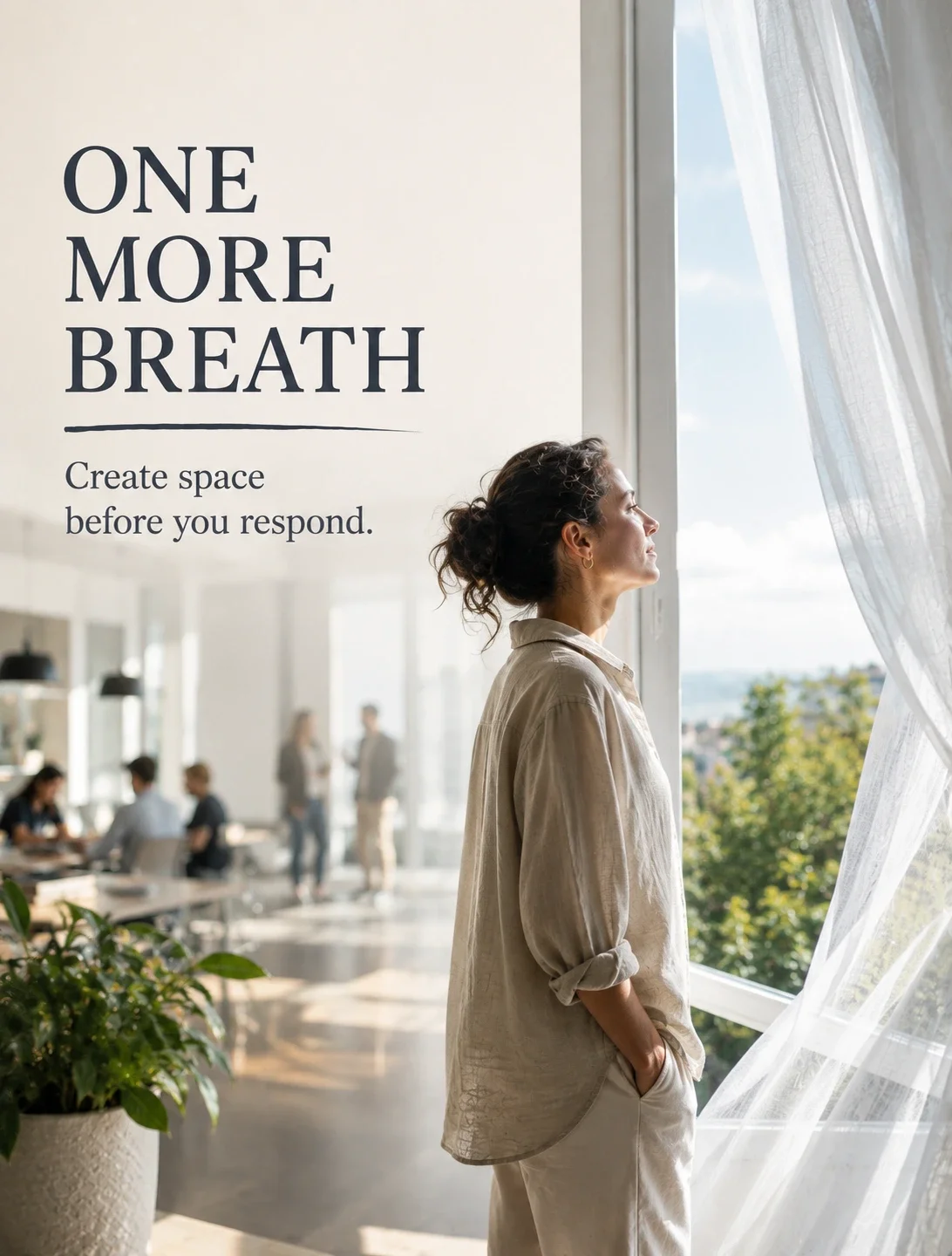
Proper Breathing Technique
One More Breath: Navigating Life’s Storms with Inner Calm
Proper breathing is usually slow, comfortable diaphragmatic breathing: relaxed shoulders, gentle inhale through the nose, lower ribs and belly expanding more than the upper chest, followed by an easy, slightly longer exhale. You do not need to take huge breaths. You do not need to force calm. The most powerful breath is often the one you can repeat when life gets loud.
There is a moment almost everyone knows.
The message arrives.
The argument begins.
The room feels too fast.
The pressure rises before your mind can explain why.
Then someone says, “Just breathe.”
It sounds simple. But when life feels overwhelming, breathing can feel shallow, rushed, or stuck in the chest.
That is why proper breathing matters.
Breathing is one of the few body systems that happens automatically but can also be guided intentionally. It can become a bridge between stress and steadiness, reaction and response, the storm outside and the calm you practise inside it.
The Start With One idea is simple:
Do not try to master every breathing technique.
Start With One more breath.
One inhale to notice.
One exhale to soften.
One pause before reaction.
What Is Proper Breathing Technique?
Proper breathing means breathing in a way that is comfortable, efficient, steady, and appropriate for the moment.
For everyday calm, that usually means:
Shoulders relaxed
Jaw unclenched
Breath quiet, not forced
Inhale through the nose if comfortable
Lower ribs and belly expanding
Upper chest staying relatively relaxed
Exhale slow and unforced
Exhale slightly longer than the inhale
The key is not to breathe as deeply as possible.
The key is to breathe as smoothly and safely as possible.
Over-breathing, trying to take huge breaths, forcing air, or holding the breath too intensely, can make some people feel dizzy, tingly, tense, or panicked.
Proper breathing should feel like returning to yourself, not fighting your body.
How Do You Breathe in 2026?
The body has not changed in 2026.
But the world around the body has.
People now live with constant alerts, fast information, economic pressure, long sitting hours, screen fatigue, and nervous systems that rarely get a clear signal that the day is done.
So the better question is not only, “How do you breathe?”
It is:
How do you breathe when modern life keeps pulling you out of your body?
A useful 2026 breathing practice can happen:
Before checking your phone.
Before answering an emotional message.
Before walking into a meeting.
After hearing bad news.
While sitting in traffic.
Before sleep.
Before reacting too quickly.
Do not wait for a crisis to learn how to breathe.
Practise one calm breath when the stakes are low, so it is available when the stakes are high.
The Healthiest Breathing Technique for Everyday Life
The healthiest everyday breathing technique for most people is gentle diaphragmatic breathing with a slightly longer exhale.
Try this.
The One More Breath Reset
Sit upright or lie down comfortably.
Relax your shoulders, jaw, and hands.
Place one hand on your chest and one hand below your ribs.
Inhale through your nose for about 3 to 4 seconds.
Let your belly and lower ribs expand gently.
Exhale slowly for about 5 to 6 seconds.
Let the belly naturally fall.
Repeat for 1 to 5 minutes.
If counting creates pressure, drop the count.
Simply breathe in gently and exhale a little longer than you inhale.
A rushed breath says: something is wrong.
A steady breath says: we can slow down.
Not everything is solved.
But in this moment, you can return.
Should You Exhale Longer Than You Inhale?
Often, yes.
For calm, stress, and breathlessness, a longer exhale can be helpful because it slows the breathing rhythm and supports relaxation.
A simple pattern is:
Inhale for 2.
Exhale for 4.
Or:
Inhale for 4.
Exhale for 6.
Do not strain. Do not empty the lungs aggressively. Do not make the breath so long that you gasp afterward.
The goal is not to win the breath.
The goal is to soften the system.
A longer exhale can be especially useful before reacting. It creates space between the trigger and your response.
That space can change a conversation.
Does the 4-7-8 Breathing Technique Work?
The 4-7-8 technique can help some people relax, especially before sleep, but it should be practised gently.
The pattern is:
Inhale for 4 seconds.
Hold for 7 seconds.
Exhale for 8 seconds.
But beginners should be careful with breath holds.
If holding for 7 seconds makes you tense, dizzy, anxious, or uncomfortable, shorten the pattern.
Try:
Inhale 3.
Hold 2.
Exhale 5.
Or skip the hold entirely:
Inhale 4.
Exhale 6.
The best breathing technique is not the one that sounds most impressive.
It is the one your body can trust.
What Is the 3-6-9 Breathing Technique?
The 3-6-9 breathing technique is commonly described as:
Inhale for 3 seconds.
Hold for 6 seconds.
Exhale for 9 seconds.
It is designed to create a long, slow exhale and a calming rhythm.
But it is not the best starting point for everyone.
A 9-second exhale may feel peaceful for some people and too intense for others. A 6-second hold may feel grounding for one person and uncomfortable for someone with anxiety, respiratory symptoms, pregnancy, or certain cardiovascular concerns.
A beginner-friendly version is:
Inhale 3.
Exhale 6.
No hold.
This keeps the most useful principle, the longer exhale, without adding unnecessary strain.
Proper breathing should feel like a doorway, not a test.
Cyclic Sighing: The Fast Reset Breath
Cyclic sighing, sometimes called the physiological sigh, can be useful when the body feels activated.
The method is simple:
Take a deep inhale through the nose.
Before exhaling, take a second short inhale.
Release one long, slow exhale through the mouth.
Repeat gently for one to five cycles.
Use it before:
A difficult call.
A stressful meeting.
A tense conversation.
A moment when your chest feels tight from emotion.
One double inhale.
One long exhale.
One return.
Box Breathing for Focus
Box breathing uses four equal parts:
Inhale for 4.
Hold for 4.
Exhale for 4.
Hold for 4.
It can be helpful before a presentation, competition, demanding task, or emotional conversation because it gives the mind a clear structure.
Imagine tracing a square.
One side up: Inhale.
One side across: Hold.
One side down: Exhale.
One side across: Hold.
If the hold feels uncomfortable, use equal breathing instead:
Inhale 4.
Exhale 4.
Still steady.
Still focused.
Less pressure.
Pursed-Lip Breathing for Shortness of Breath
Pursed-lip breathing is especially useful when someone feels short of breath or winded.
The technique:
Relax your neck and shoulders.
Inhale gently through your nose for about 2 seconds.
Purse your lips as if softly blowing on hot tea.
Exhale slowly through pursed lips for about 4 seconds.
This technique is often taught for breathlessness because it slows the exhale and helps people avoid rushing air out.
The principle is simple:
Do not force the breath. Let the exhale guide you back.
How Do I Train Myself to Breathe Properly?
You train proper breathing the same way you train any useful habit: gently, consistently, and before crisis.
Step 1: Practise When Calm
Do not wait until panic, conflict, or breathlessness to begin.
Practise for one minute in the morning.
Step 2: Use One Simple Pattern
Start with:
Inhale 4.
Exhale 6.
Repeat ten times.
That is less than two minutes.
Step 3: Attach It to a Daily Cue
Breathe before:
Checking your phone.
Starting the car.
Opening your laptop.
Entering a meeting.
Eating lunch.
Going to sleep.
A habit needs a doorway.
Choose one.
Step 4: Keep It Comfortable
If you feel dizzy, tense, or short of breath, stop and return to normal breathing.
Breathwork is not about forcing the body into calm.
It is about helping the body remember calm.
Step 5: Use Breath Before Reaction
The most powerful use of breathing may be the breath before the reply.
The breath before the argument.
The breath before the decision.
The breath before you become someone you later regret.
That is where one breath becomes wisdom.
What Proper Breathing Does Not Mean
Proper breathing does not mean taking the biggest possible breath.
It does not mean breathing all day perfectly.
It does not mean always using the nose if your nose is blocked or breathing feels difficult.
It does not mean holding your breath until you feel uncomfortable.
It does not mean breathwork replaces medical care.
It does not mean your lungs physically grow larger.
Breathing exercises may improve breathing efficiency, awareness, respiratory muscle use, and tolerance of stress or breathlessness. But they do not make the lungs expand permanently like a bigger container.
You are not trying to build bigger lungs.
You are learning to use the breath you already have with more skill.
Choosing the Right Breathing Technique
Different moments need different breaths.
For Everyday Calm
Use diaphragmatic breathing.
Inhale 4. Exhale 6.
For Racing Thoughts
Use longer-exhale breathing.
Inhale 3. Exhale 6.
For Sudden Stress
Use cyclic sighing.
Inhale. Small second inhale. Long exhale.
For Focus
Use box breathing.
Inhale 4. Hold 4. Exhale 4. Hold 4.
For Sleep
Use gentle 4-7-8 breathing or a modified version.
Inhale 4. Hold briefly. Exhale slowly.
For Shortness of Breath
Use pursed-lip breathing.
Inhale through the nose. Exhale slowly through pursed lips.
The point is not to memorize every technique.
The point is to have one reliable breath you can return to.
When Breathing Exercises May Not Be Enough
Breathing exercises are useful, but they are not a substitute for medical evaluation.
Seek urgent medical care for:
New or severe shortness of breath
Chest pain or pressure
Fainting
Blue or gray lips or face
Confusion
Sudden worsening symptoms
Breathing difficulty that does not improve
If you have asthma, COPD, heart disease, panic symptoms, pregnancy, sleep-disordered breathing, or persistent breathlessness, ask a qualified clinician which breathing techniques are appropriate for you.
This is especially important with breath holds, rapid breathing, or intense breathwork.
The safest rule is simple:
Breathing should help you feel steadier. If it makes you feel worse, stop.
A Start With One Breathing Plan
Try this seven-day plan.
Day 1: One Breath
Before checking your phone, take one slow breath in and one longer breath out.
Day 2: One Minute
Practise diaphragmatic breathing for one minute.
Day 3: One Longer Exhale
Inhale for 4 seconds. Exhale for 6 seconds. Repeat five times.
Day 4: One Stress Reset
Try one cyclic sigh: inhale, small second inhale, long exhale.
Day 5: One Pause Before Reaction
Before replying to a message, take one breath first.
Day 6: One Breath During Movement
Use pursed-lip breathing while walking up stairs or recovering from effort.
Day 7: One Reflection
Ask: When did one breath change the next moment?
This is how breathing becomes more than technique.
It becomes a practice of returning to yourself.
Frequently Asked Questions
How do you breathe in 2026?
Breathe gently, slowly, and comfortably. For most people, the best everyday method is diaphragmatic breathing: inhale through the nose if comfortable, let the lower ribs and belly expand, then exhale slowly and slightly longer than the inhale.
What is the healthiest breathing technique?
The healthiest general technique is relaxed diaphragmatic breathing with an easy, longer exhale. It supports efficient breathing without forcing the body.
Does the 4-7-8 breathing technique work?
It can help some people relax or prepare for sleep, but it should be modified if the breath-hold feels uncomfortable. Try a shorter version or use a simple 4-second inhale and 6-second exhale.
What is the 3-6-9 breathing technique?
The 3-6-9 technique usually means inhaling for 3 seconds, holding for 6 seconds, and exhaling for 9 seconds. Beginners may prefer a safer version: inhale for 3 and exhale for 6, without holding.
Should you exhale longer than you inhale?
For calm and stress relief, a longer exhale is often helpful. Try inhaling for 4 seconds and exhaling for 6 seconds. Keep it gentle.
How do I train myself to breathe properly?
Practise one to five minutes daily, attach it to a cue like waking up or starting work, keep the breath comfortable, and use one slow breath before reacting in stressful moments.
One More Breath
Life will not stop being loud.
There will still be calls you do not want to make.
News you cannot control.
Rooms that feel tense.
Days that ask too much.
But breath gives you a way back.
Not out of life.
Back into it.
One inhale to notice.
One exhale to soften.
One pause before reaction.
One quiet signal to the body: we are here.
You do not need to master every technique.
You do not need to become a breathwork expert.
Start smaller.
Start With One more breath.
A breath before the phone.
A breath before the meeting.
A breath before the answer.
A breath before the storm carries you away.
Start With One more breath. Inner calm begins the moment you return to yourself.
📘 Get the book: Start With One: Small Steps to a Big Change → a.co/d/5uoSTEJ
One Breath Back to Calm: Sources Behind “Proper Breathing Technique 2026”
Cleveland Clinic — Diaphragmatic Breathing
https://my.clevelandclinic.org/health/articles/9445-diaphragmatic-breathingJohns Hopkins Medicine — Breathing Techniques
https://www.hopkinsmedicine.org/breathlessness-clinic/breathing-techniquesNHS — Breathing Exercises for Stress
https://www.nhs.uk/mental-health/self-help/guides-tools-and-activities/breathing-exercises-for-stress/Cleveland Clinic — Pursed-Lip Breathing
https://my.clevelandclinic.org/health/treatments/9443-pursed-lip-breathingAmerican Lung Association — Breathing Exercises
https://www.lung.org/lung-health-diseases/wellness/breathing-exercisesCleveland Clinic — 4-7-8 Breathing Technique
https://health.clevelandclinic.org/4-7-8-breathingCell Reports Medicine — Brief Structured Respiration Practices Enhance Mood and Reduce Physiological Arousal
https://doi.org/10.1016/j.xcrm.2022.100895Harvard Health Publishing — Relaxation Techniques: Breath Control Helps Quell Errant Stress Response
https://www.health.harvard.edu/mind-and-mood/relaxation-techniques-breath-control-helps-quell-errant-stress-responseMemorial Sloan Kettering Cancer Center — Breathing Exercises
https://www.mskcc.org/cancer-care/patient-education/breathing-exercisesStart With One — Source Book Inspiration
Start With One: Small Steps to a Big Change
Relevant theme: “One More Breath: Navigating Life’s Storms with Inner Calm”